YWCOPEN INDEXREV. 0.1

An open index of an infrastructural aesthetic

An index of objects
in circulation.

Yiwucore identifies a visual condition shaped by commercial display, categorisation and circulation—from wholesale markets to the shops they supply. Beginning in Yiwu, China, the index follows that condition wherever it reappears.

Read the classification
INDEX / FIELD GUIDE / REPOSITORY / CANDIDATE RECORDS / VERSIONED CATEGORIES /

01 / CLASSIFICATION

A working taxonomy

Each record receives one primary class, one circulation phase and any number of visual traits. The classes name operations rather than styles: how commodities are arranged, displaced and made imaginable.

Select a category to filter the public index.

CIRCULATION PHASE / CHOOSE ONE

DisplayStoredPackedIn transitResaleIn useAfterlife

VISUAL TRAITS / CHOOSE ANY

RepetitionCompressionMiniaturisationExcessBrightnessVacancyGeneric specificity

02 / PUBLIC INDEX

Published records

Search by place, object, accession number or descriptor. Candidate submissions remain private until editorial review is complete.

053 RECORDS

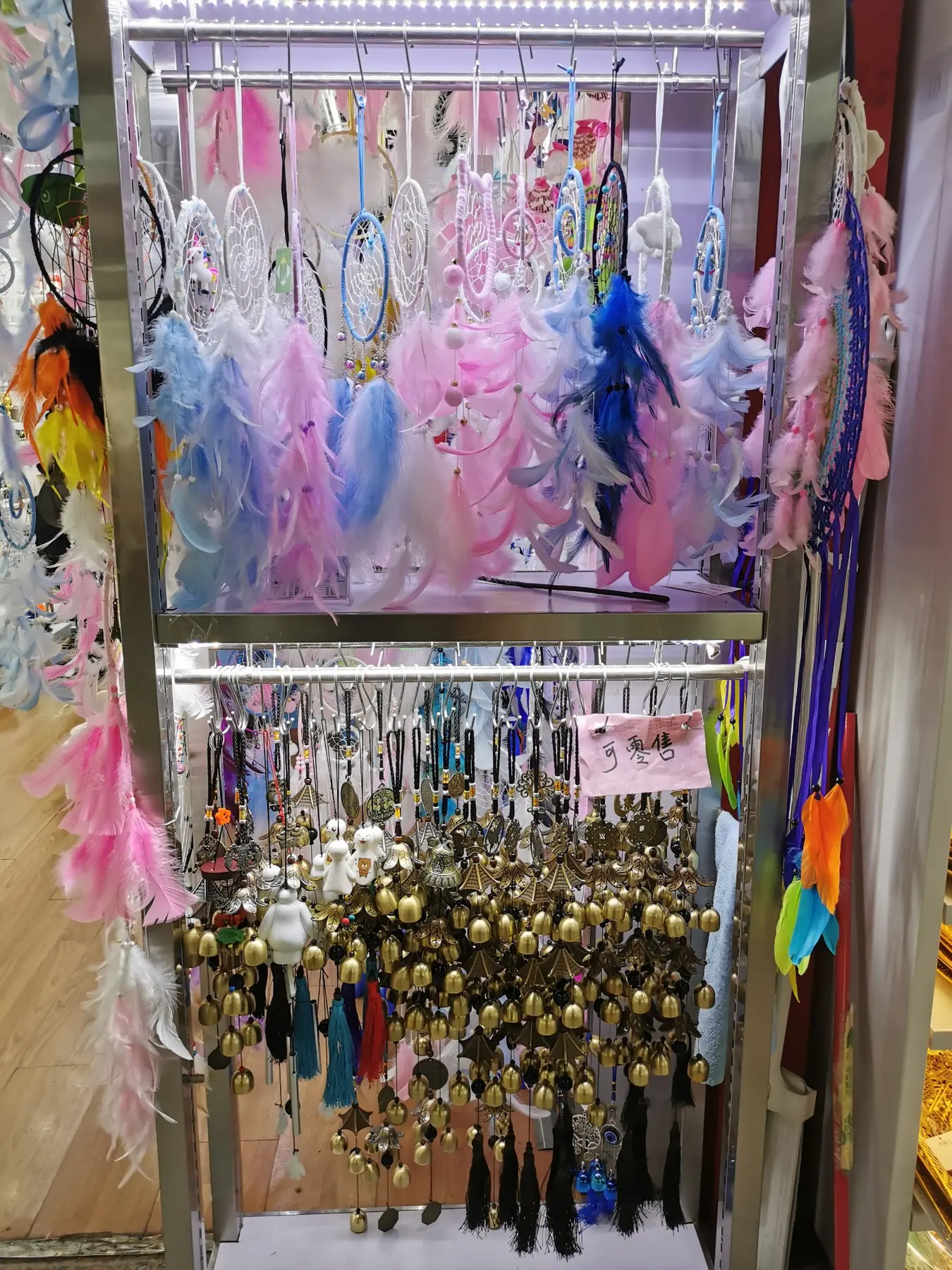
Pastel feathered dreamcatchers hang above a dense lower tier of brass bells, tassels and pendants, bringing distinct ornament families into a single vertical display system.
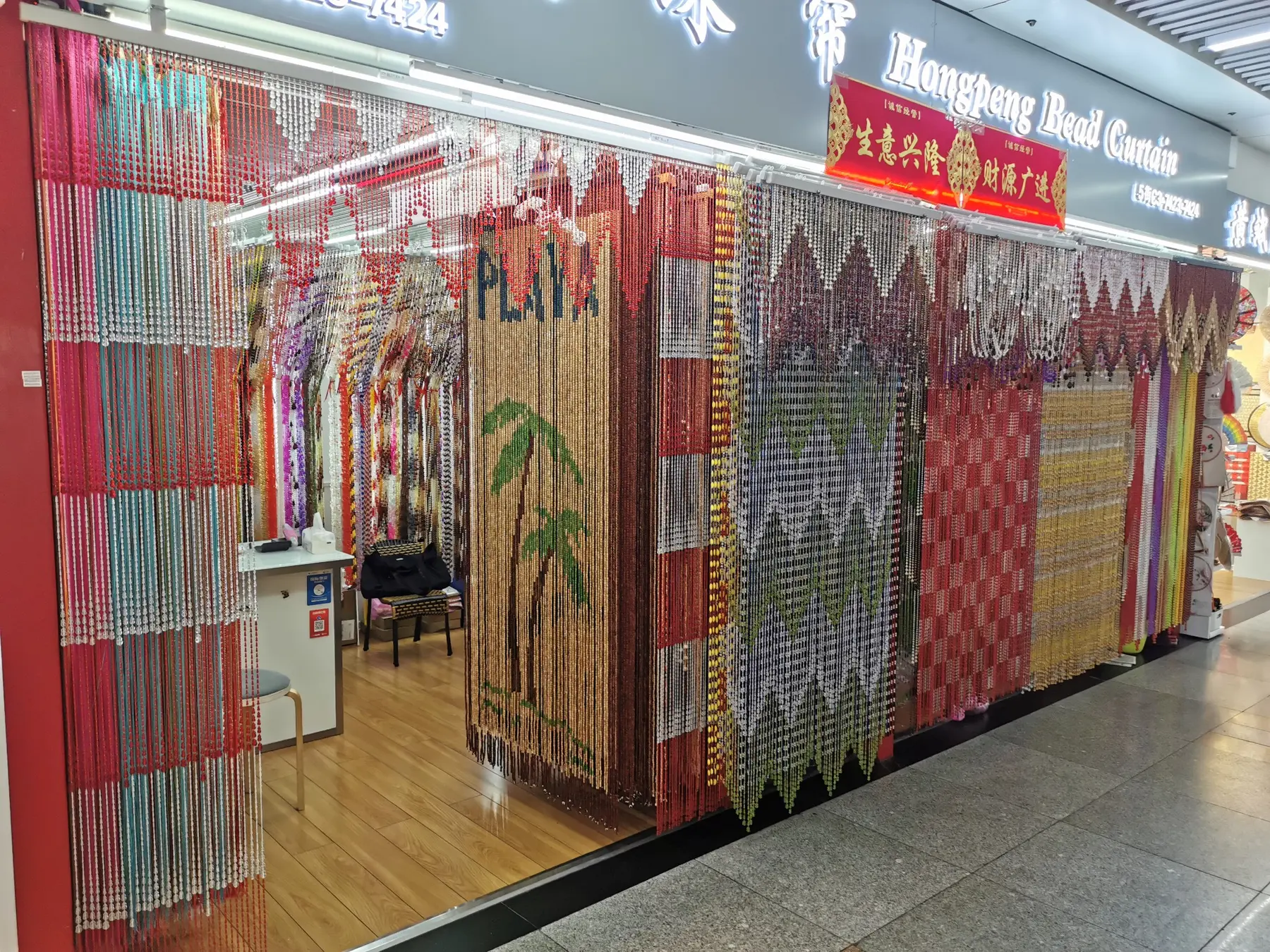
Beaded curtains in architectural, floral and geometric patterns form both the merchandise and the permeable walls of a wholesale booth.
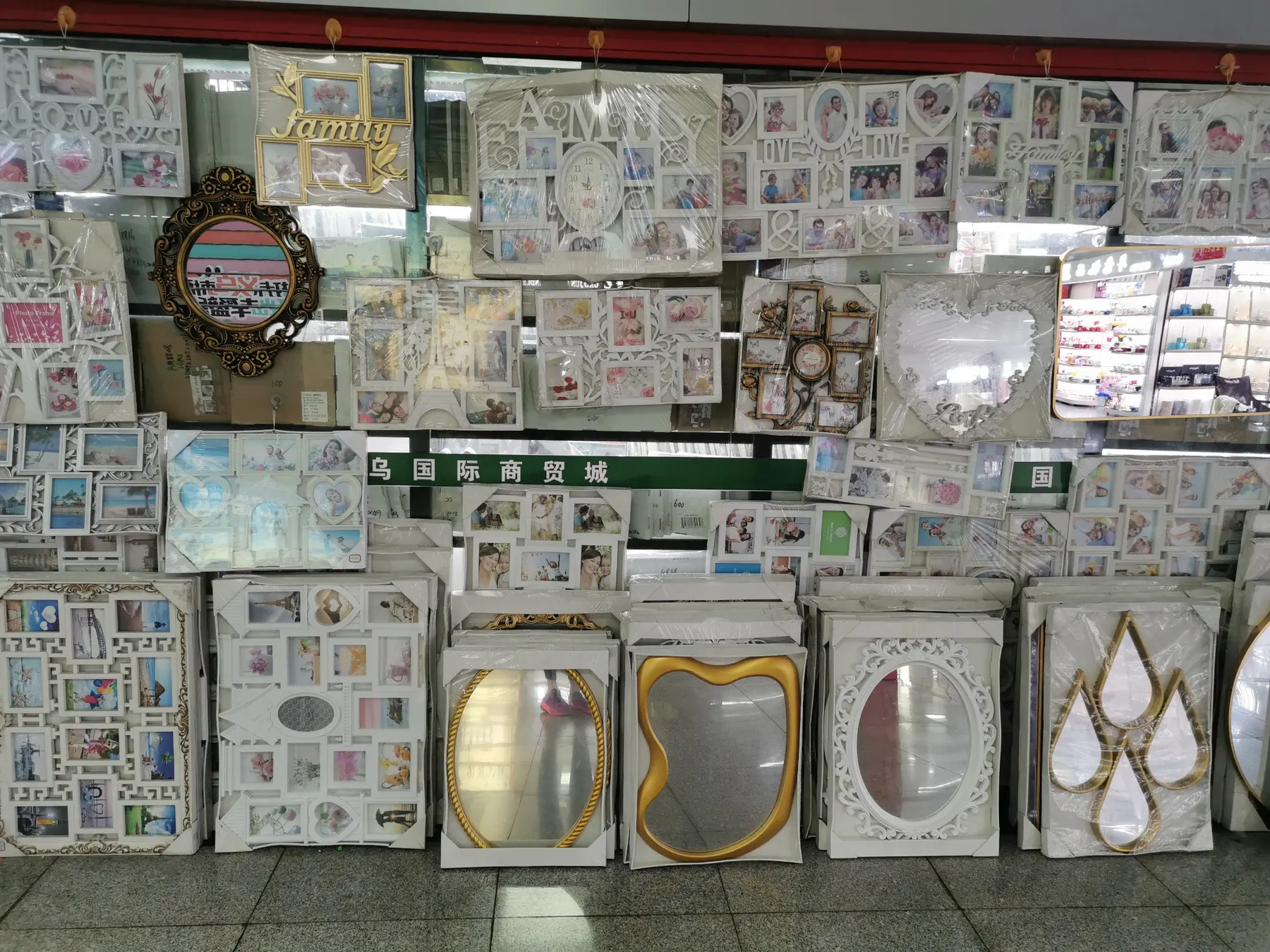
Multi-aperture family photo frames and decorative mirrors accumulate across a reflective booth façade, multiplying generic domestic images and possible interiors.
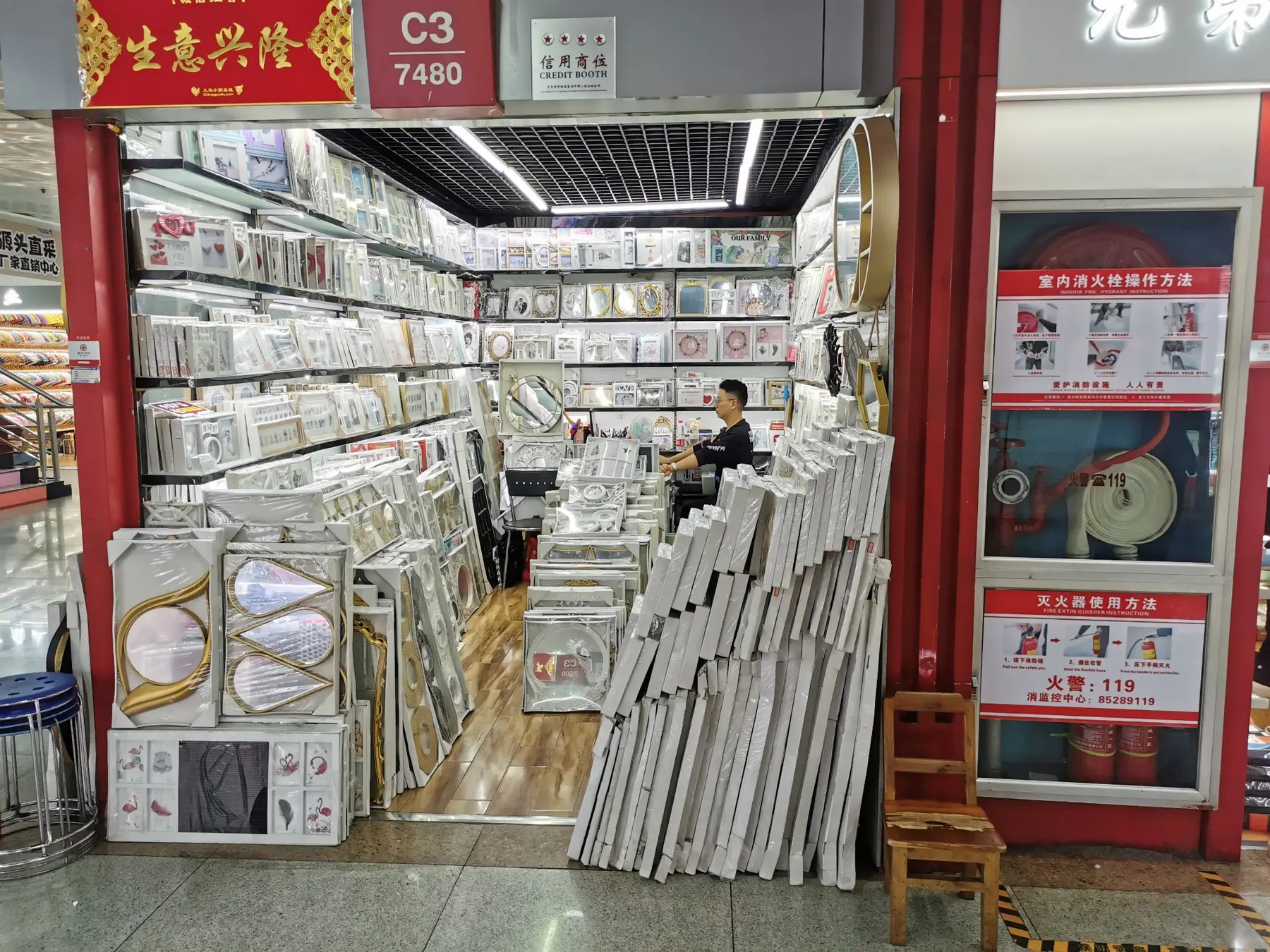
Packaged frames and mirrors fill the shelving and floor of a narrow booth, with stock leaning into the corridor at the boundary between storage, display and circulation.
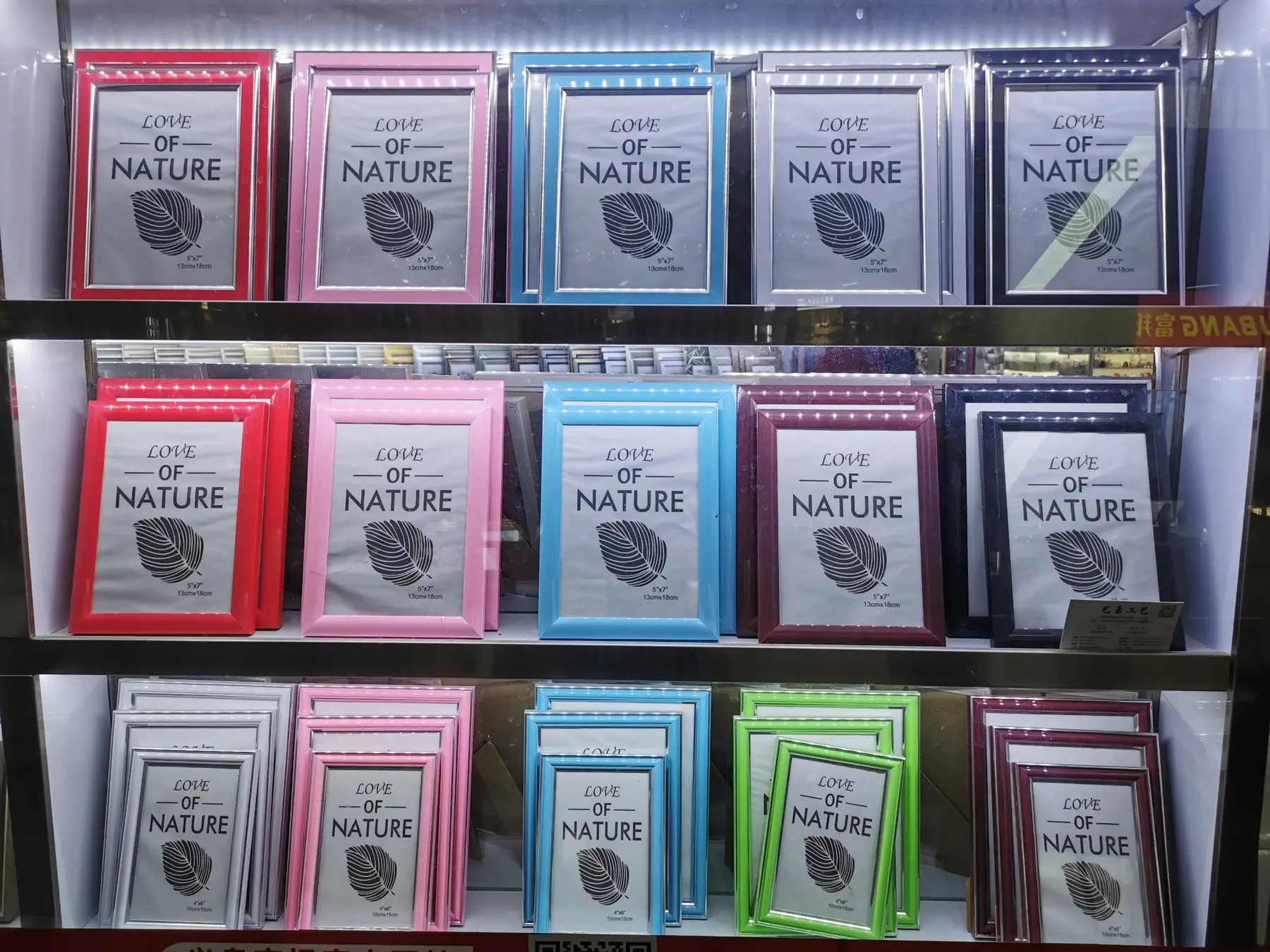
LED-edged photo frames repeat across three shelves in shifting colourways, each holding the same placeholder image and the phrase “Love of Nature.”
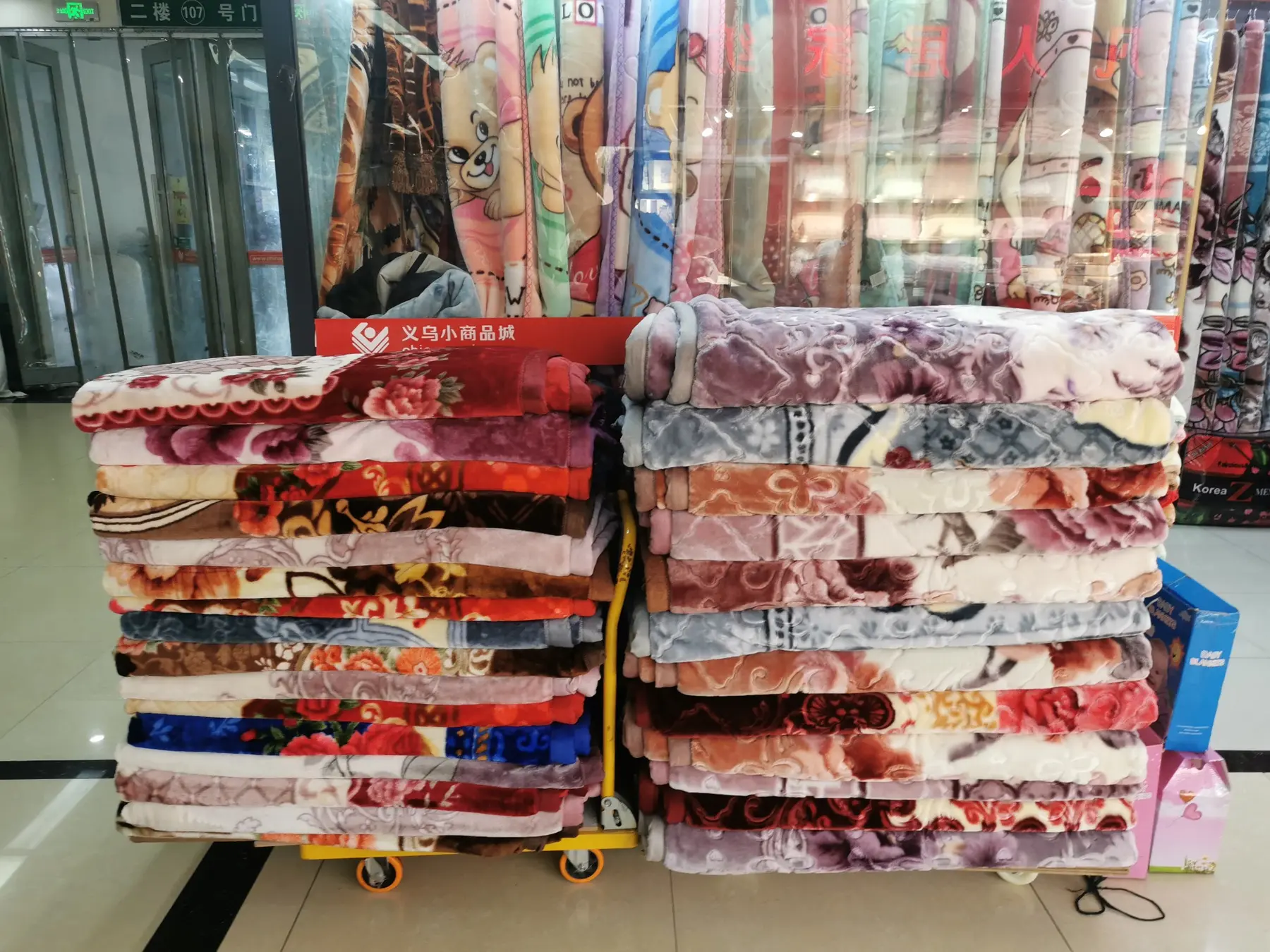
Floral blankets are folded into two dense blocks on wheeled carts, placing the softness and variety of the stock inside a highly regular unit of temporary storage.
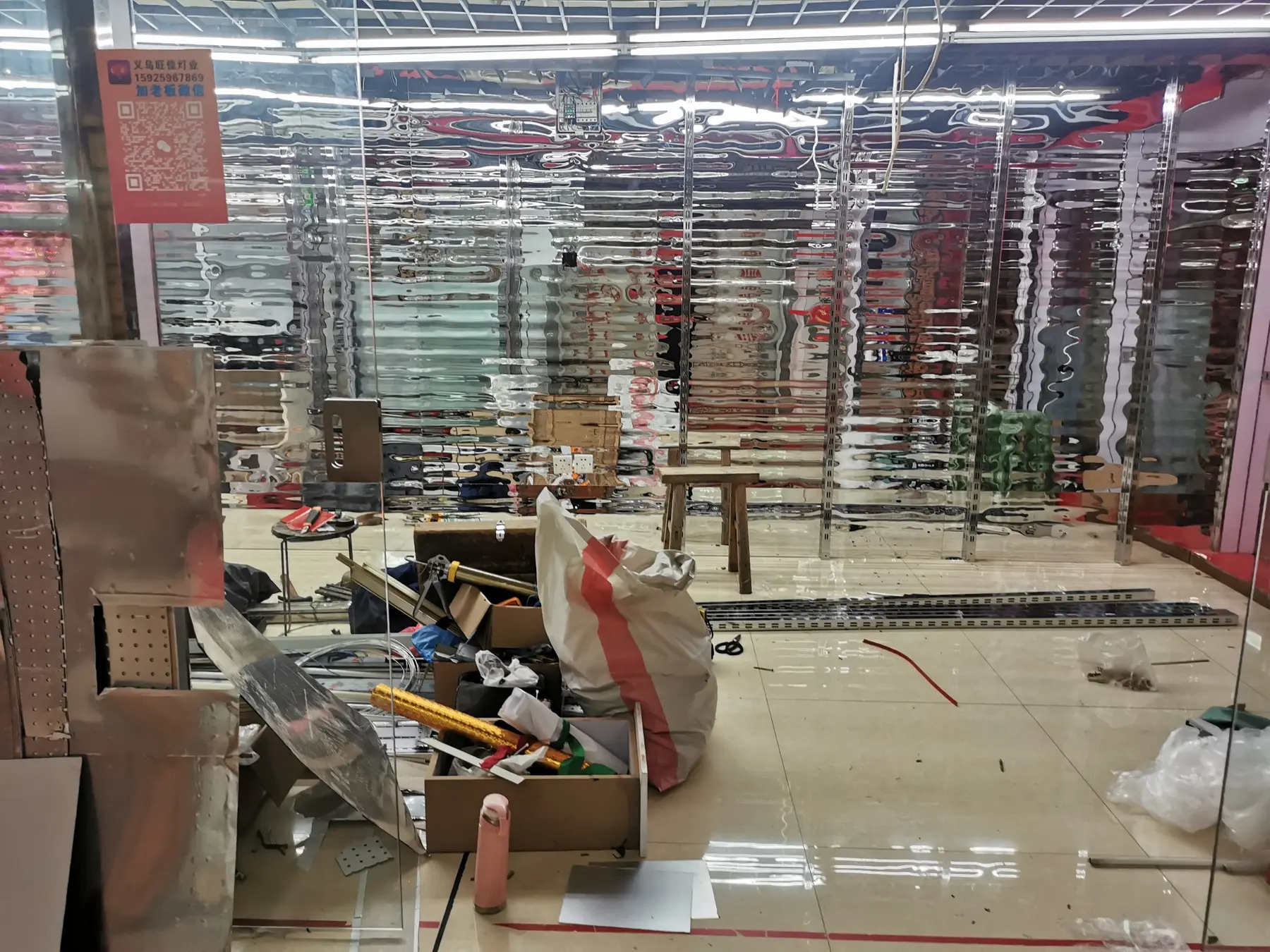
Reflective metal wall panels distort the surrounding market while offcuts, rails, cartons and tools occupy the booth threshold during fitting-out.
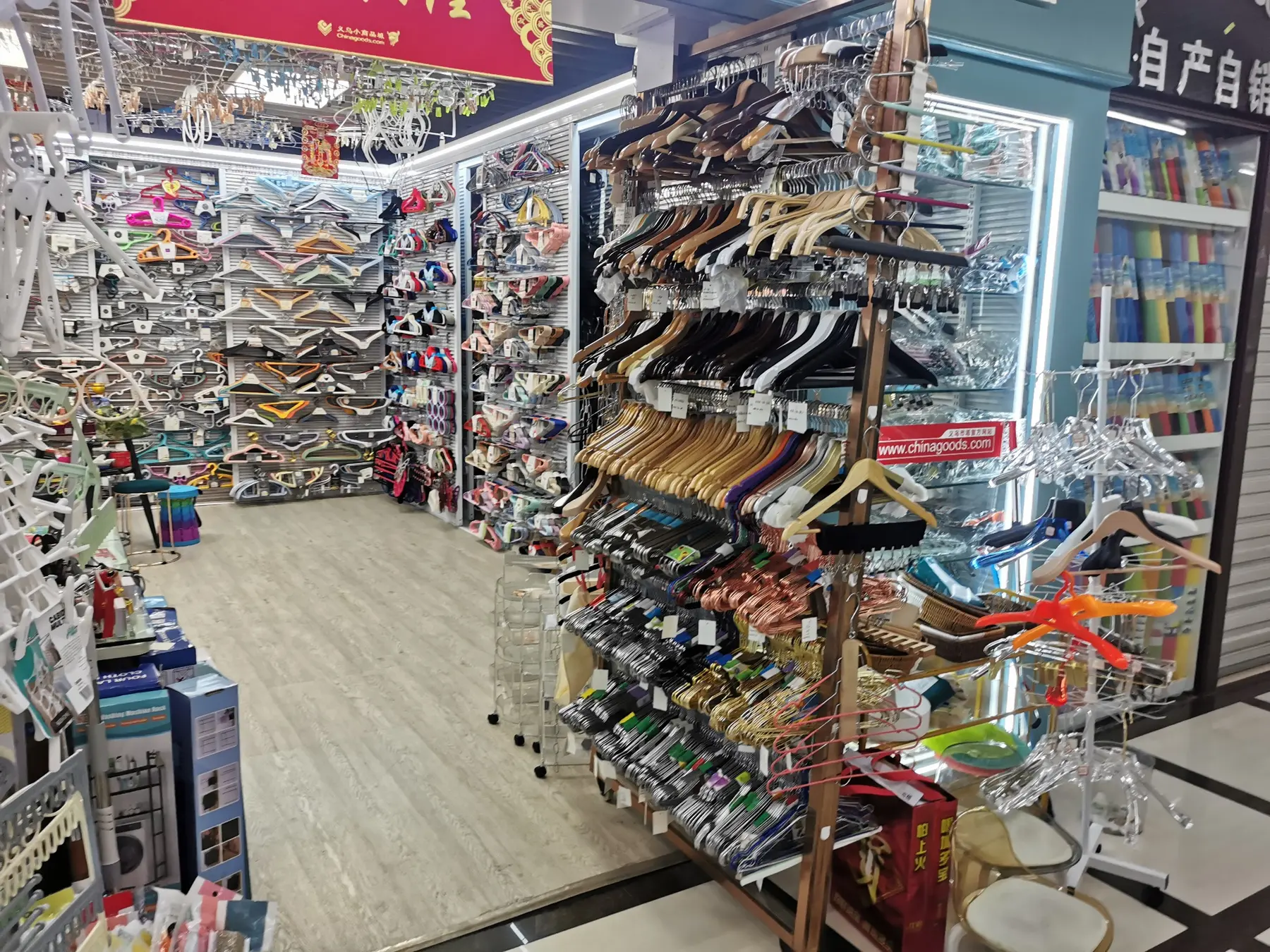
Plastic, wire, padded and wooden clothes hangers are sorted by material and type across a slatted wall and a freestanding rack, turning a minor object into a dense taxonomy.
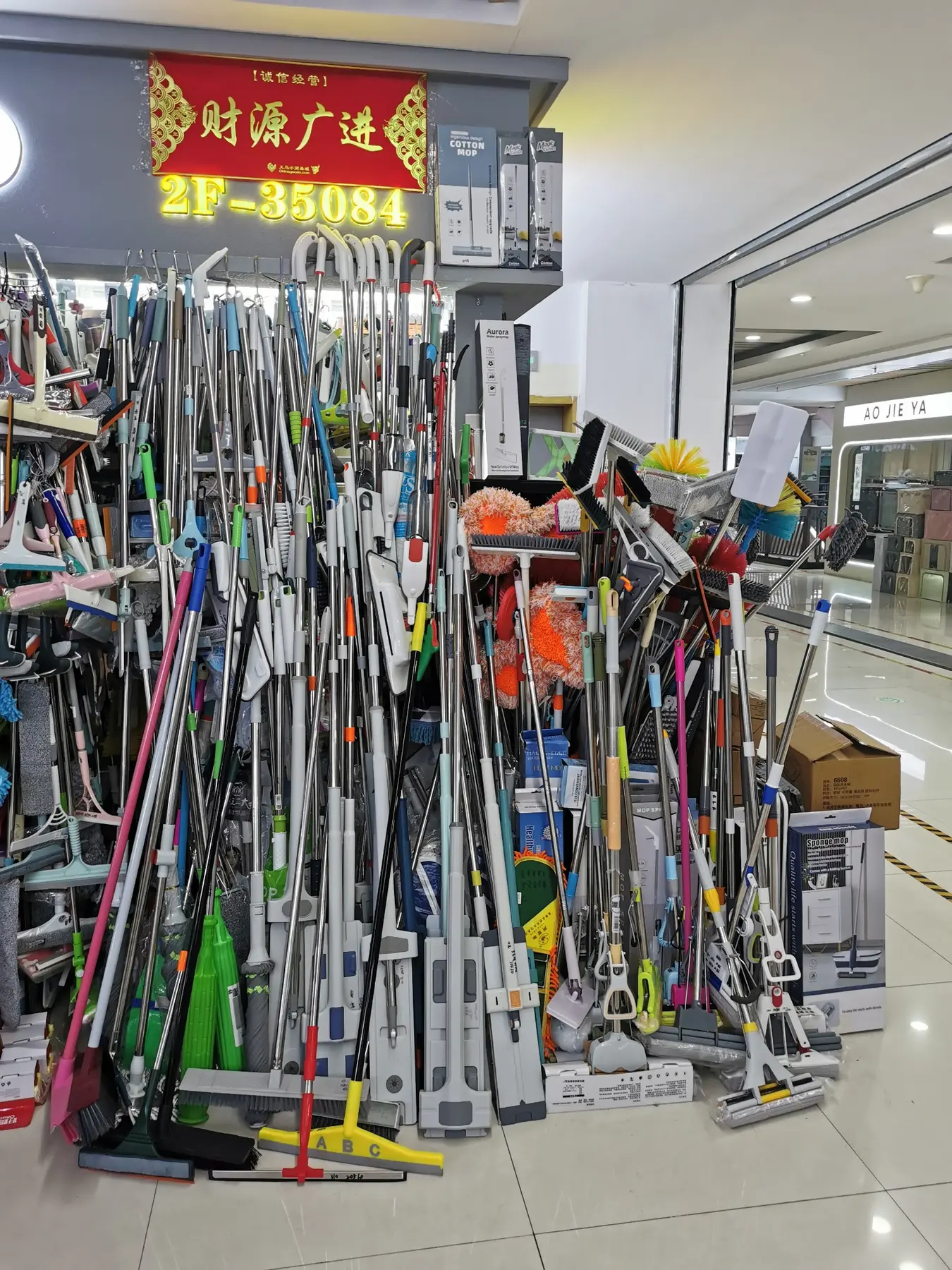
Mops, squeegees, brushes and extendable handles stand in a dense vertical field at booth 2F-35084, with small colour accents marking variations inside a standardised family.
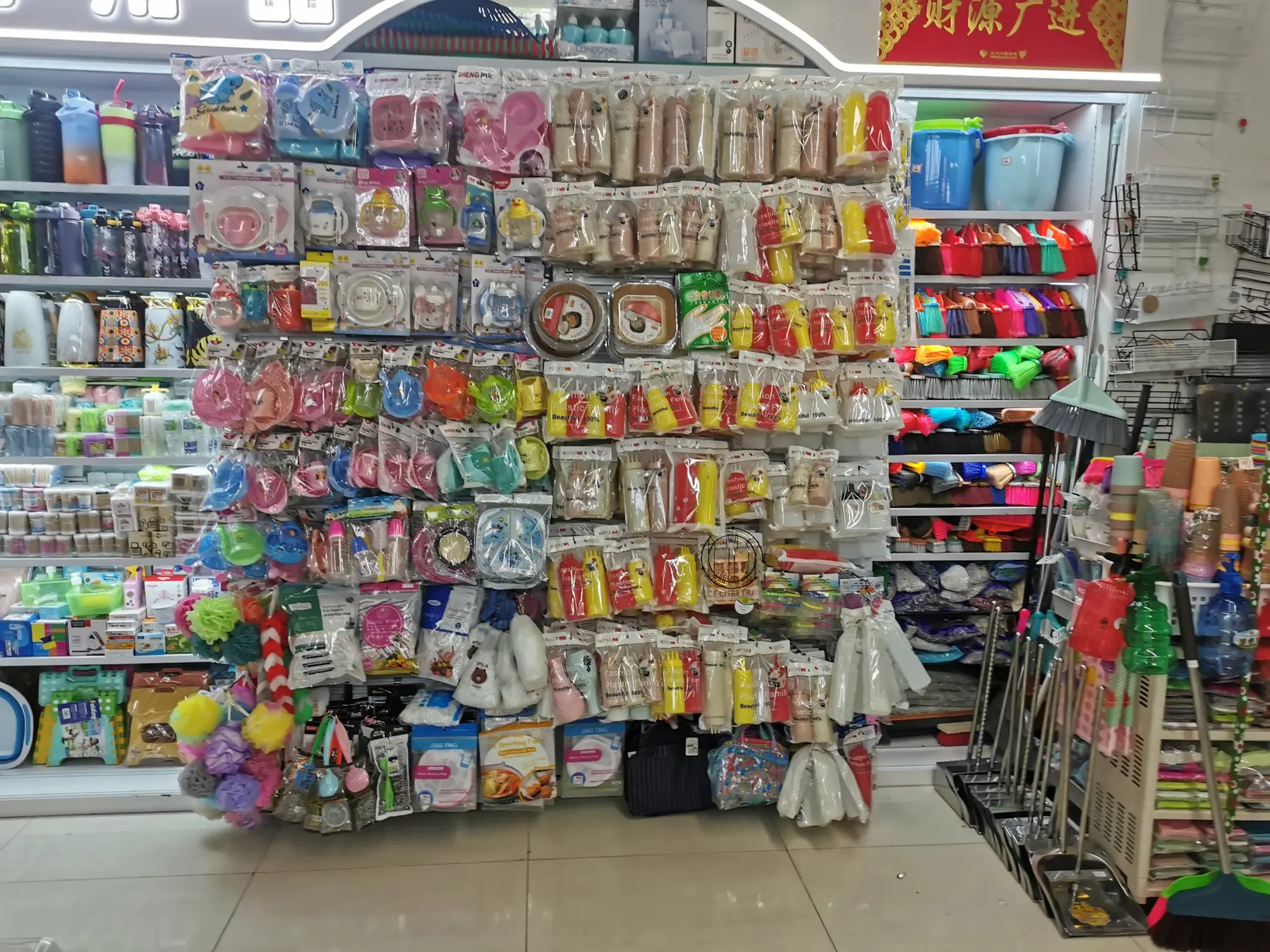
Packaged cups, dispensers, scrubbers and household tools occupy a central grid, flanked by shelves of bottles, brushes and plastic storage goods in repeated colourways.
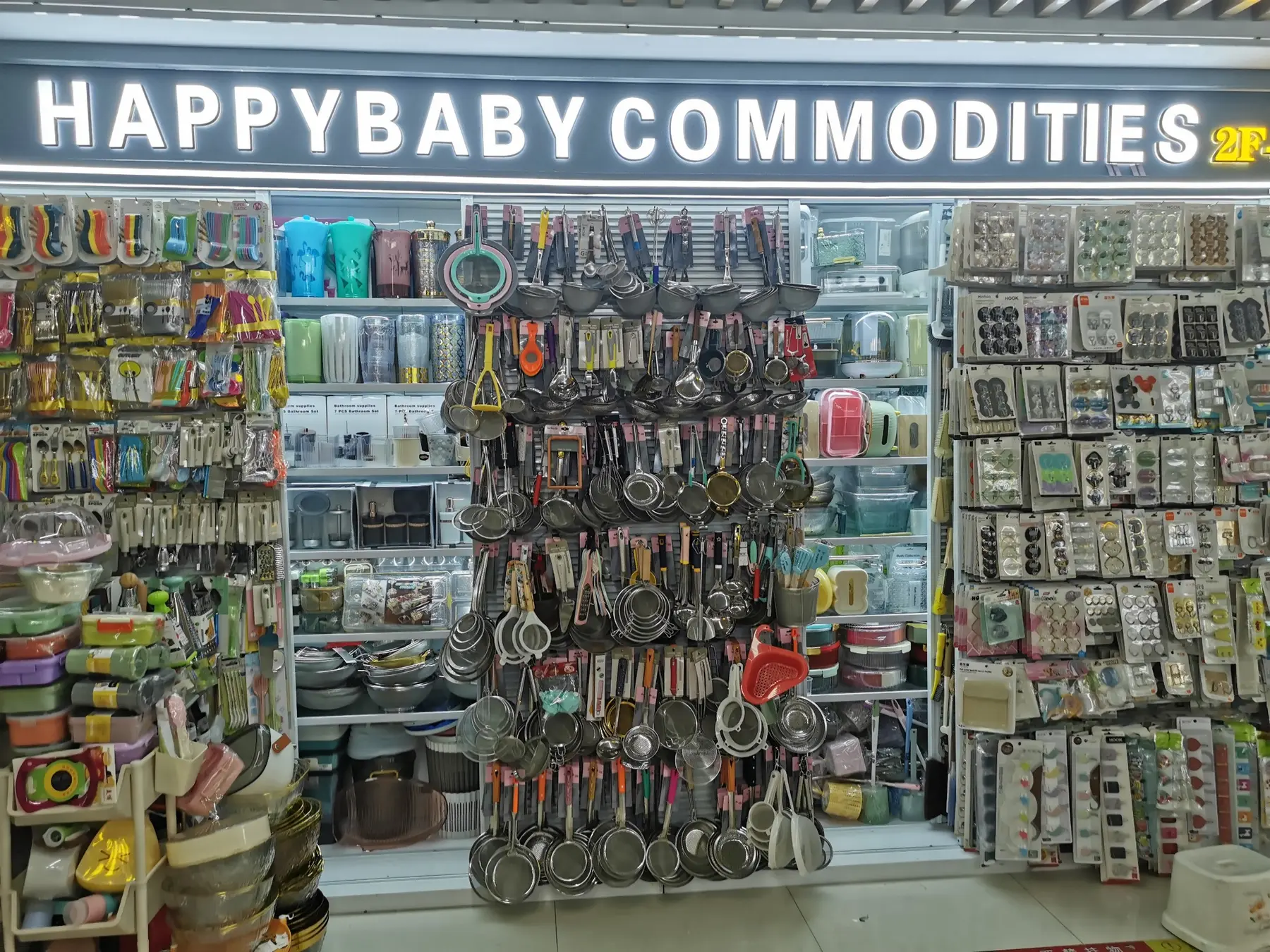
Cooking utensils, strainers and small fittings form a symmetrical wall beneath the illuminated “Happybaby Commodities” sign, with loose product families divided into modular panels.
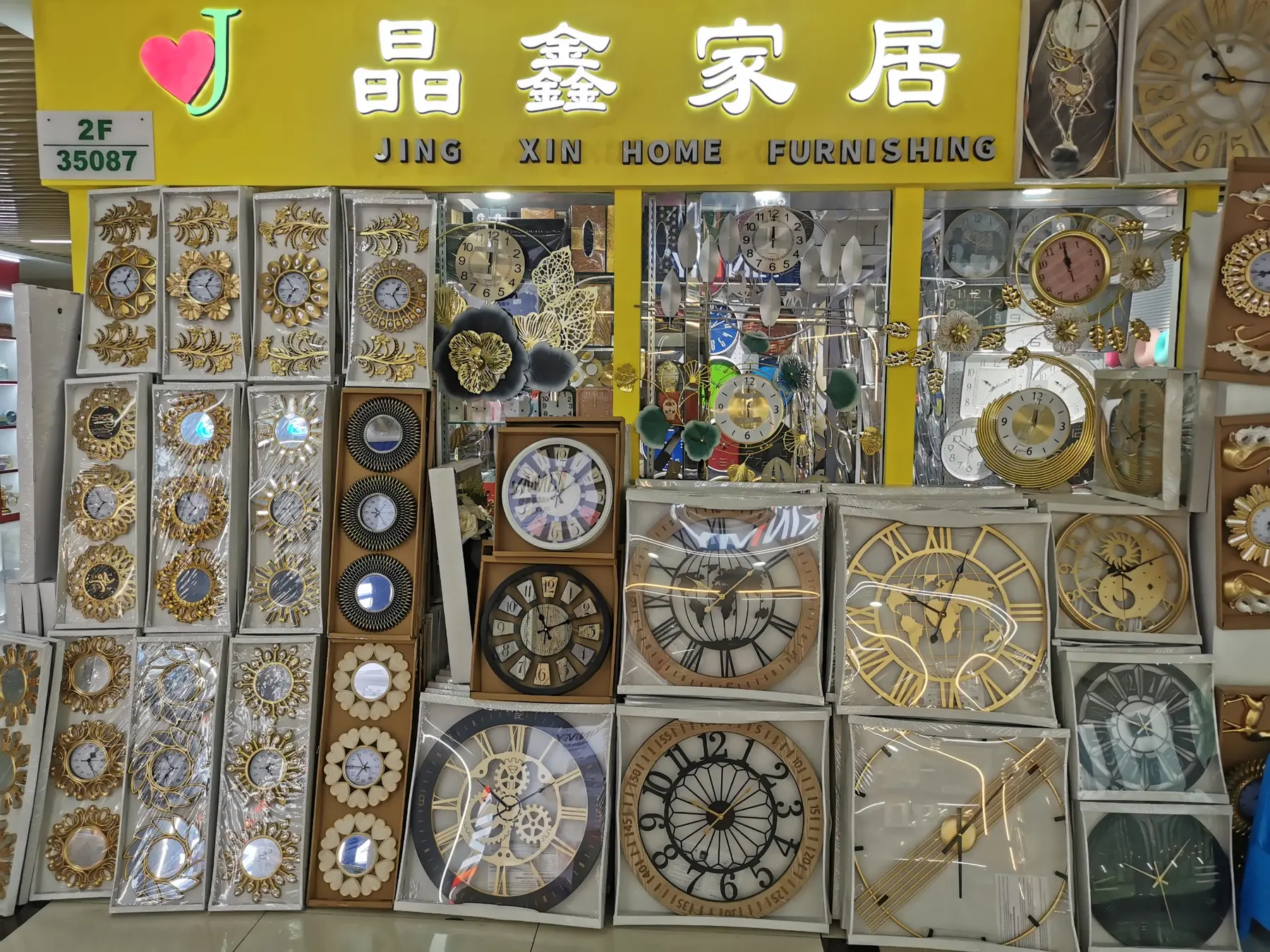
Clocks and decorative mirrors fill the front of a home-furnishing booth, repeating circles, radiating ornaments, Roman numerals and world maps across a gold-and-white field.
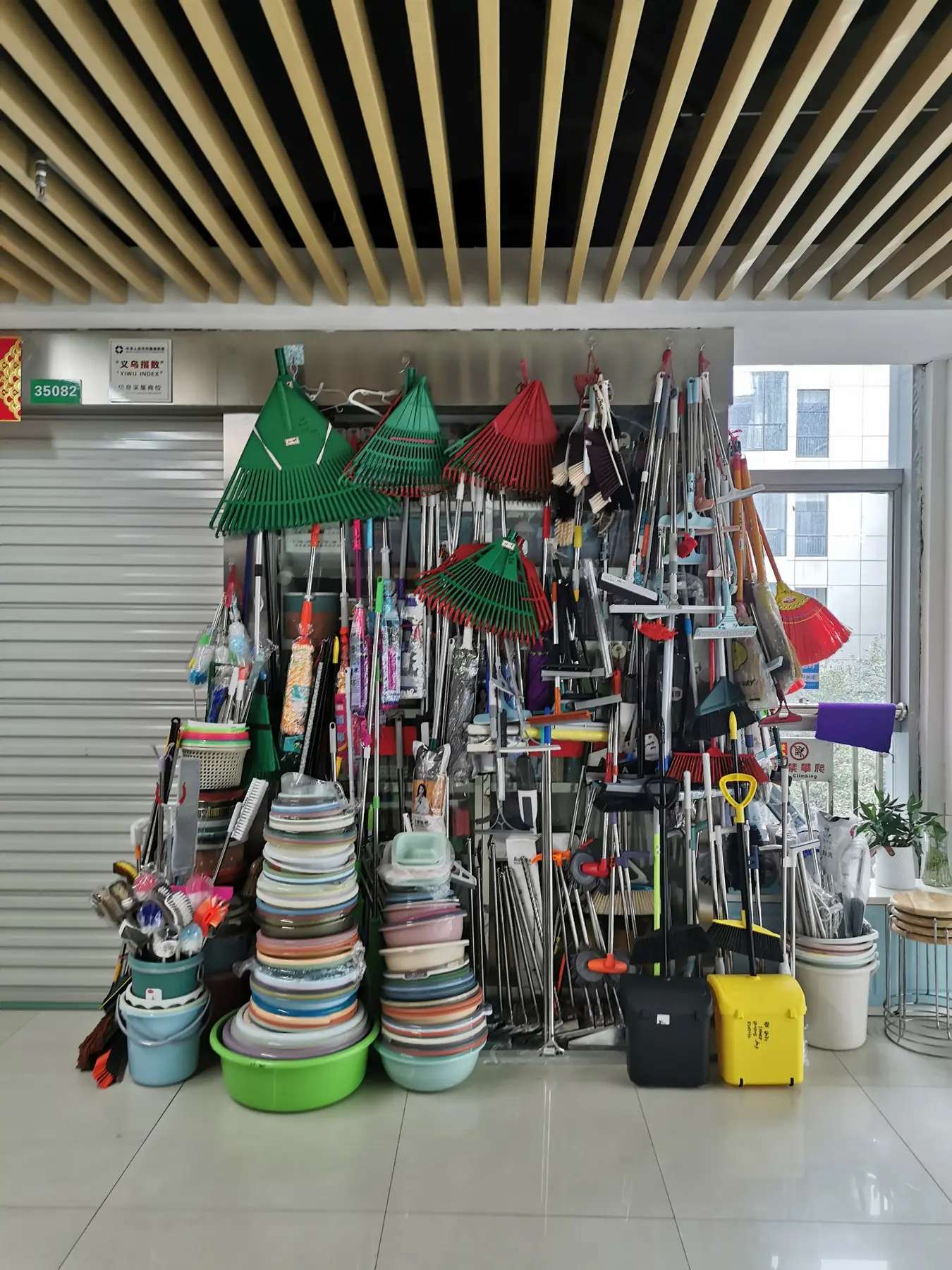
Rakes, brooms, mops and brushes are compressed into an upright cluster beside stacked basins and buckets, turning the edge of the booth into both display and temporary storage.
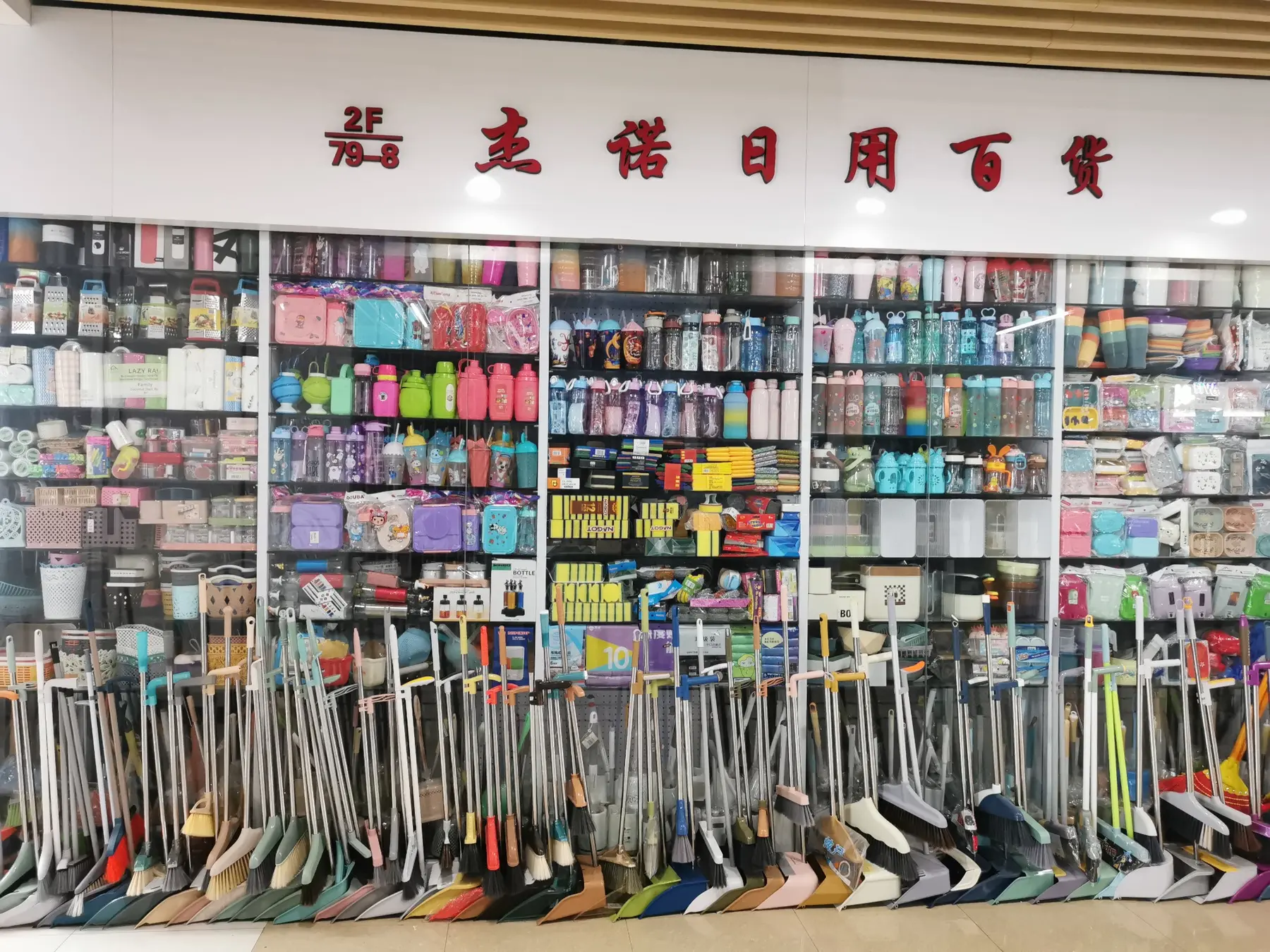
Bottles, containers and small household goods form gridded shelves behind a continuous foreground line of long-handled brushes and dustpans.
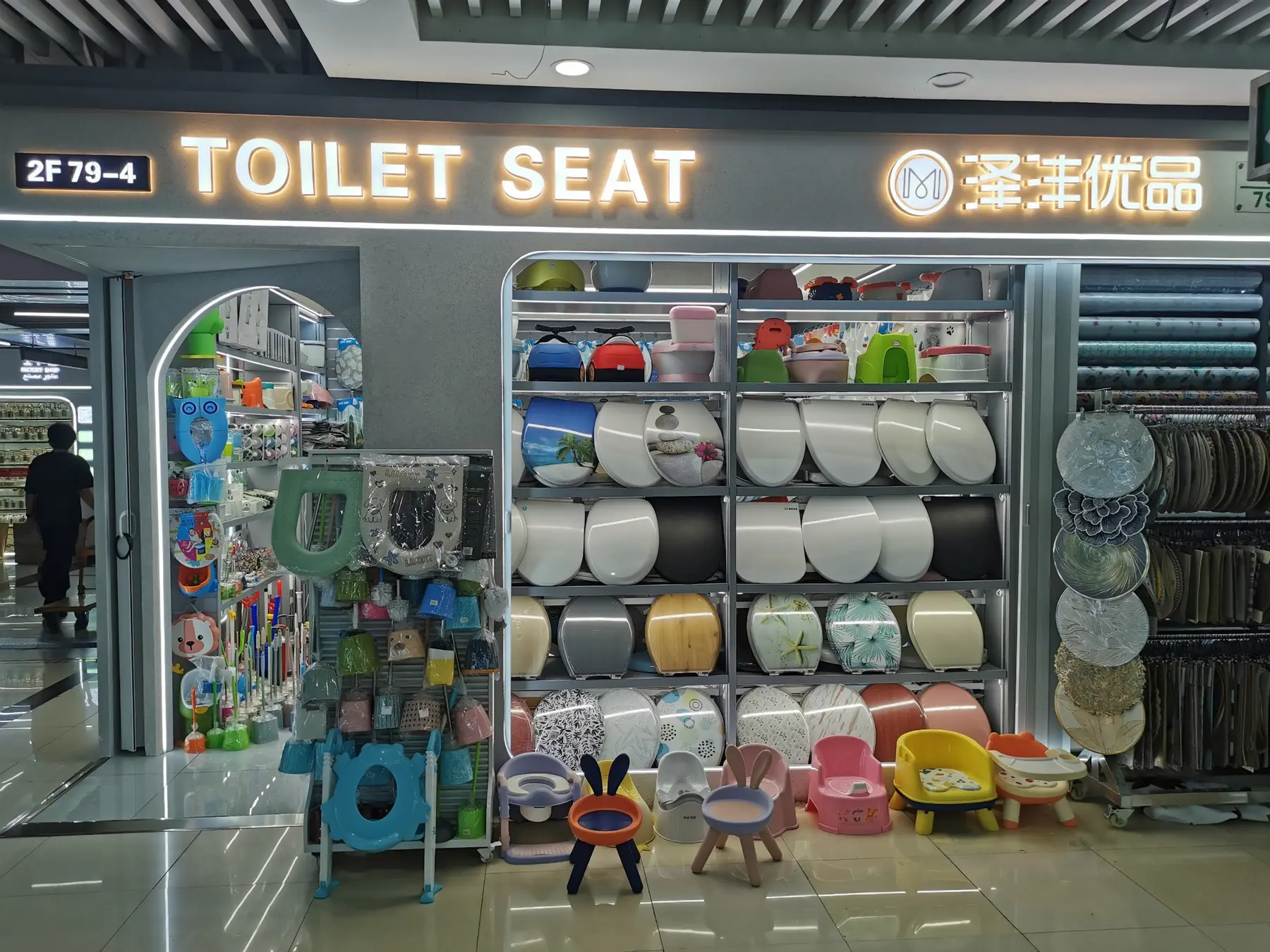
Toilet seats repeat across a modular storefront in plain, printed and wood-effect finishes, while a front row of brightly coloured children’s seats introduces another scale of the same object.
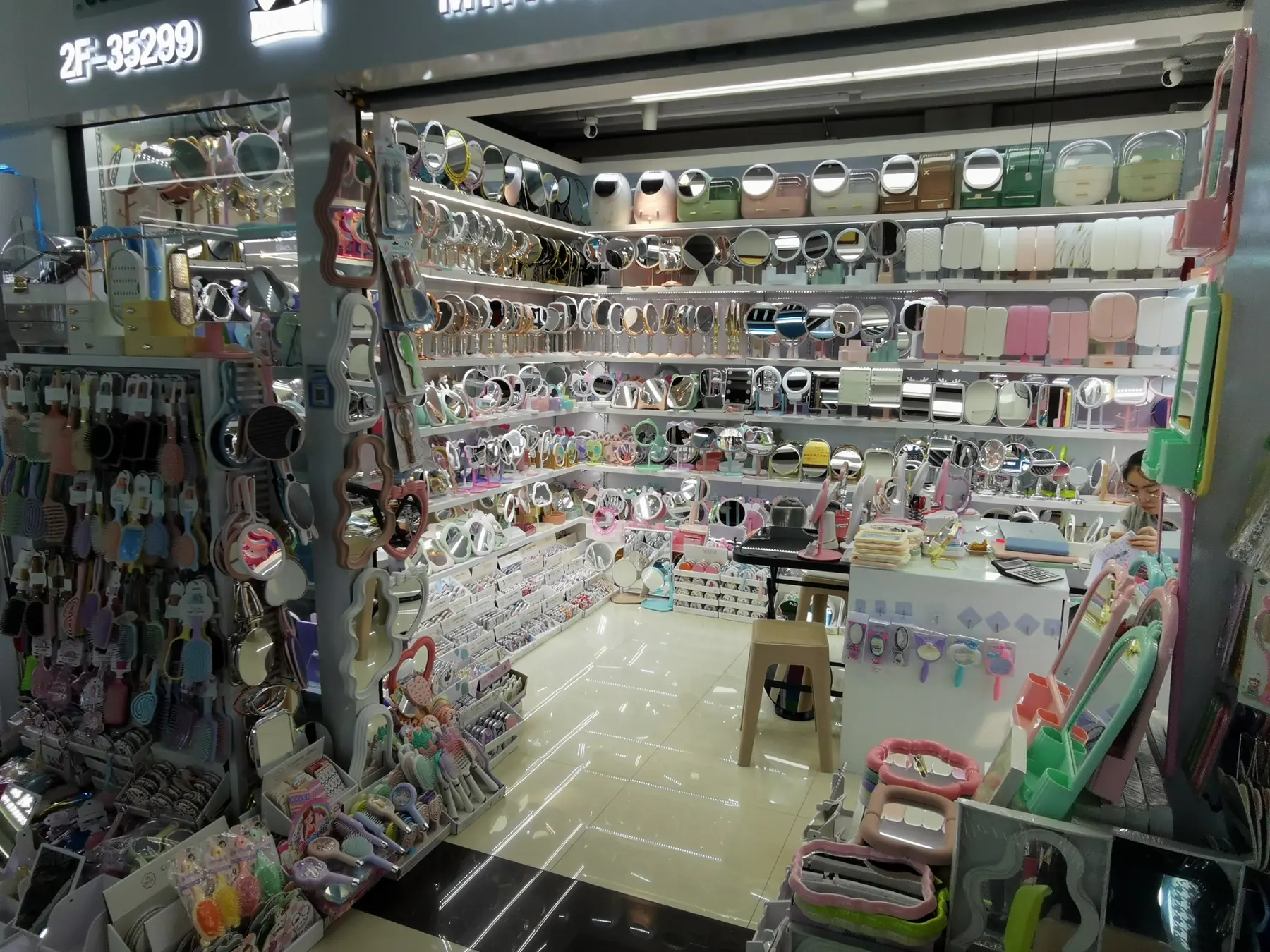
Handheld, tabletop and lighted vanity mirrors fill the booth from floor to ceiling, their repeated reflective surfaces multiplying the shelves, products and market beyond.
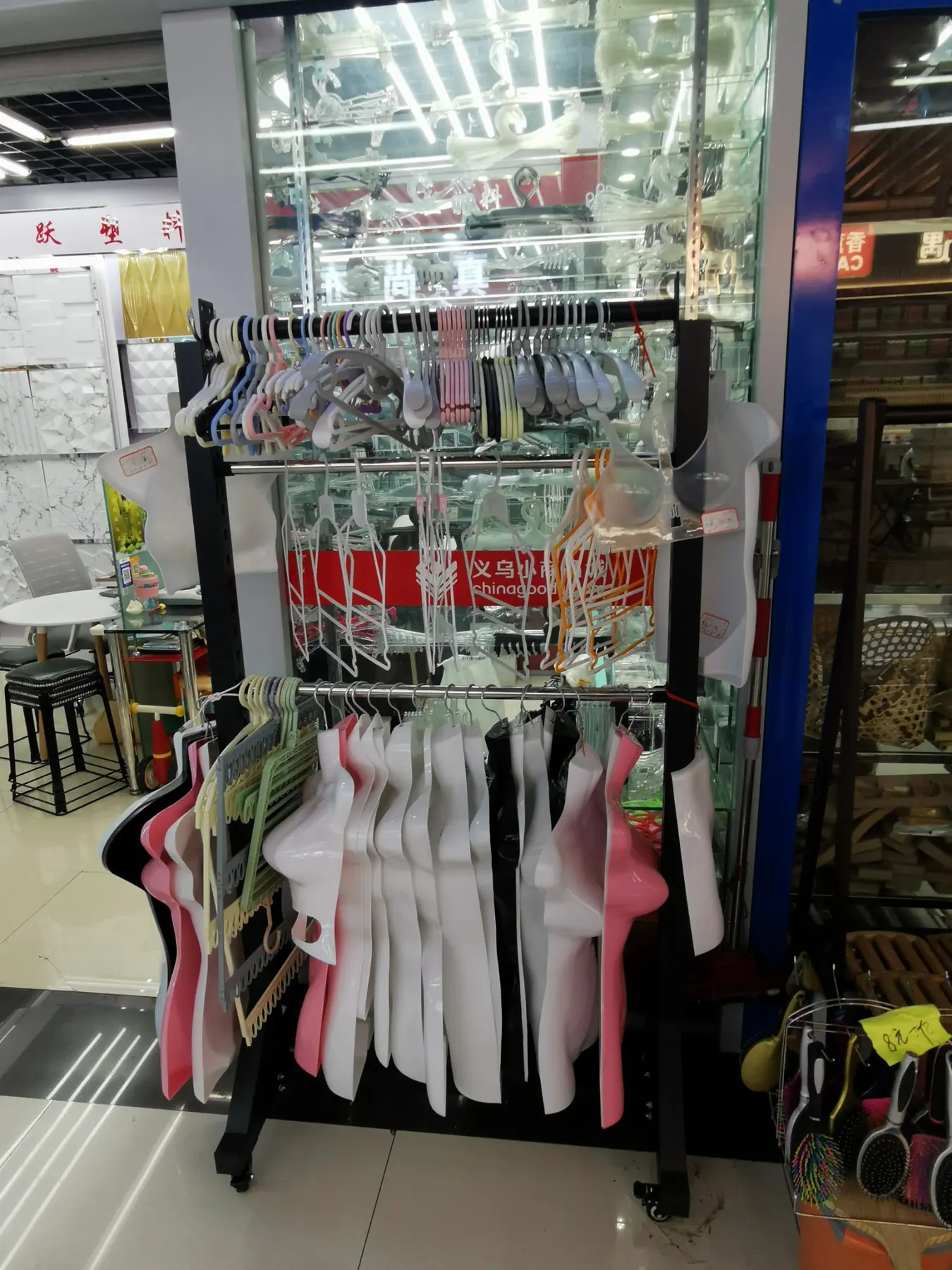
Miniature hangers, clips and hollow torso-shaped garment forms share a wheeled rack, gathering different devices for presenting and organising bodies without clothing.
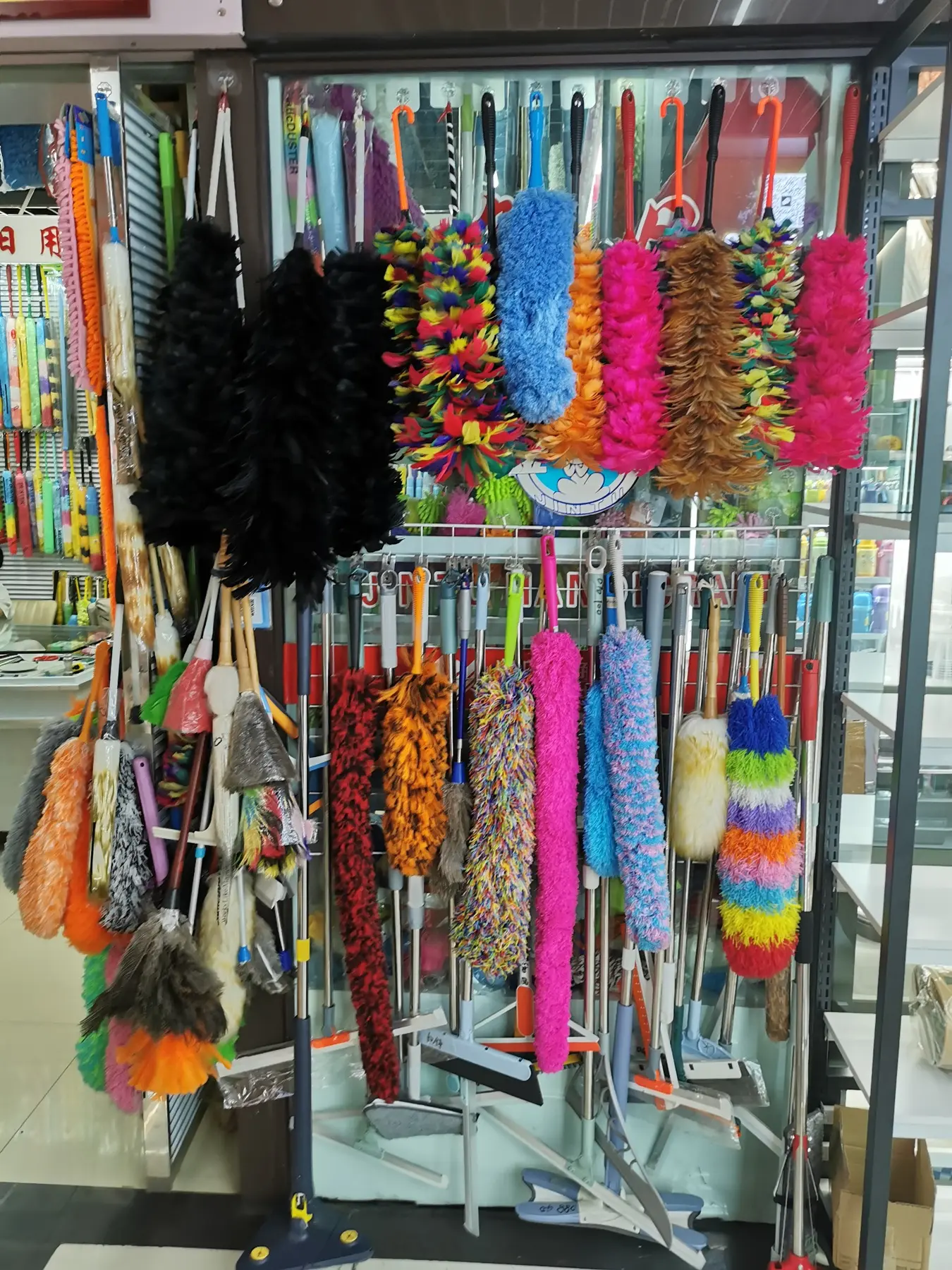
Feather, microfibre and synthetic dusters hang in a dense vertical field, turning small variations in colour, texture and handle shape into an exuberant product taxonomy.
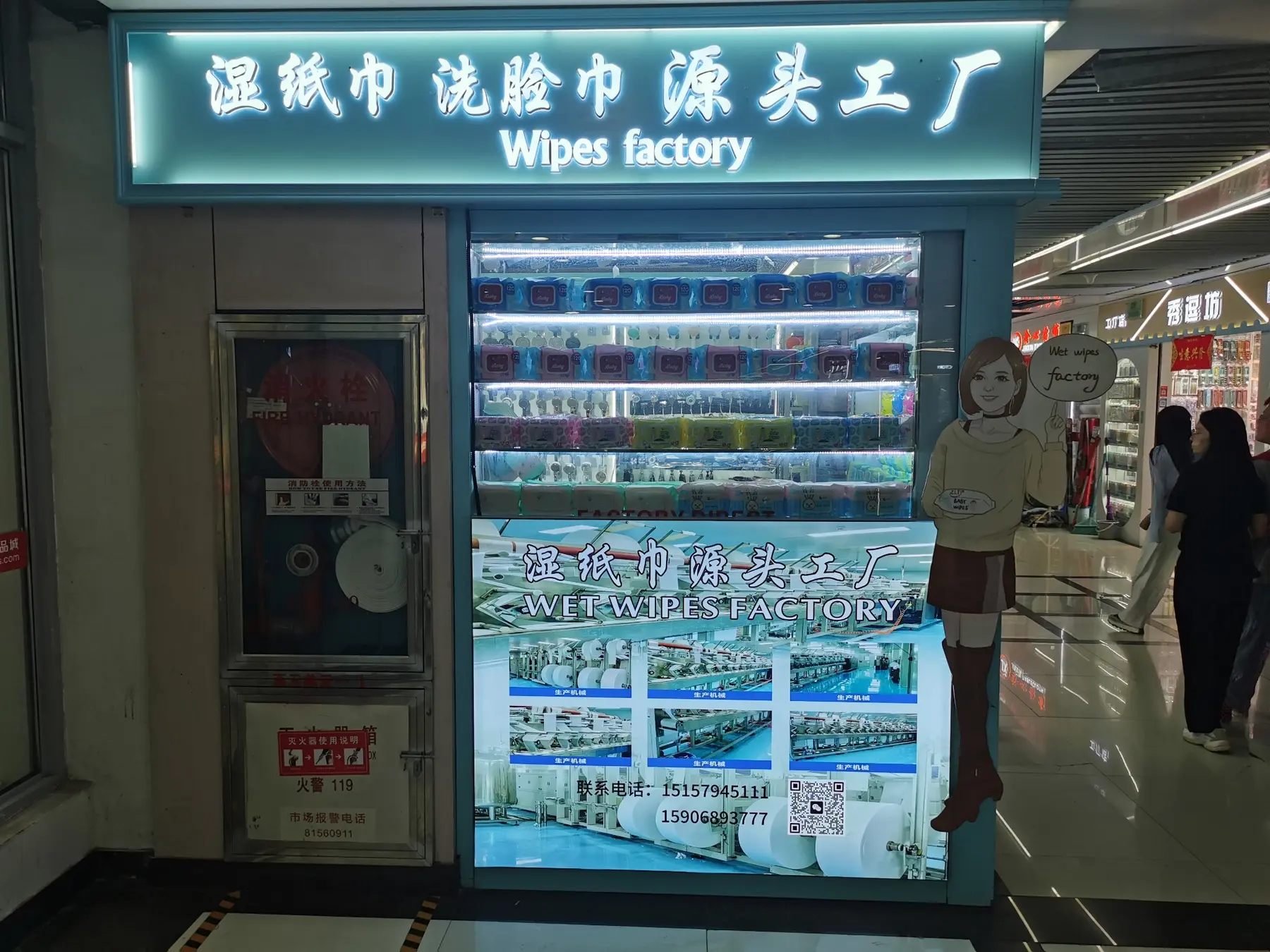
Packets of wet wipes occupy an illuminated cabinet above photographs of industrial production lines, compressing the factory, its representative and its finished goods into a single market-facing display.
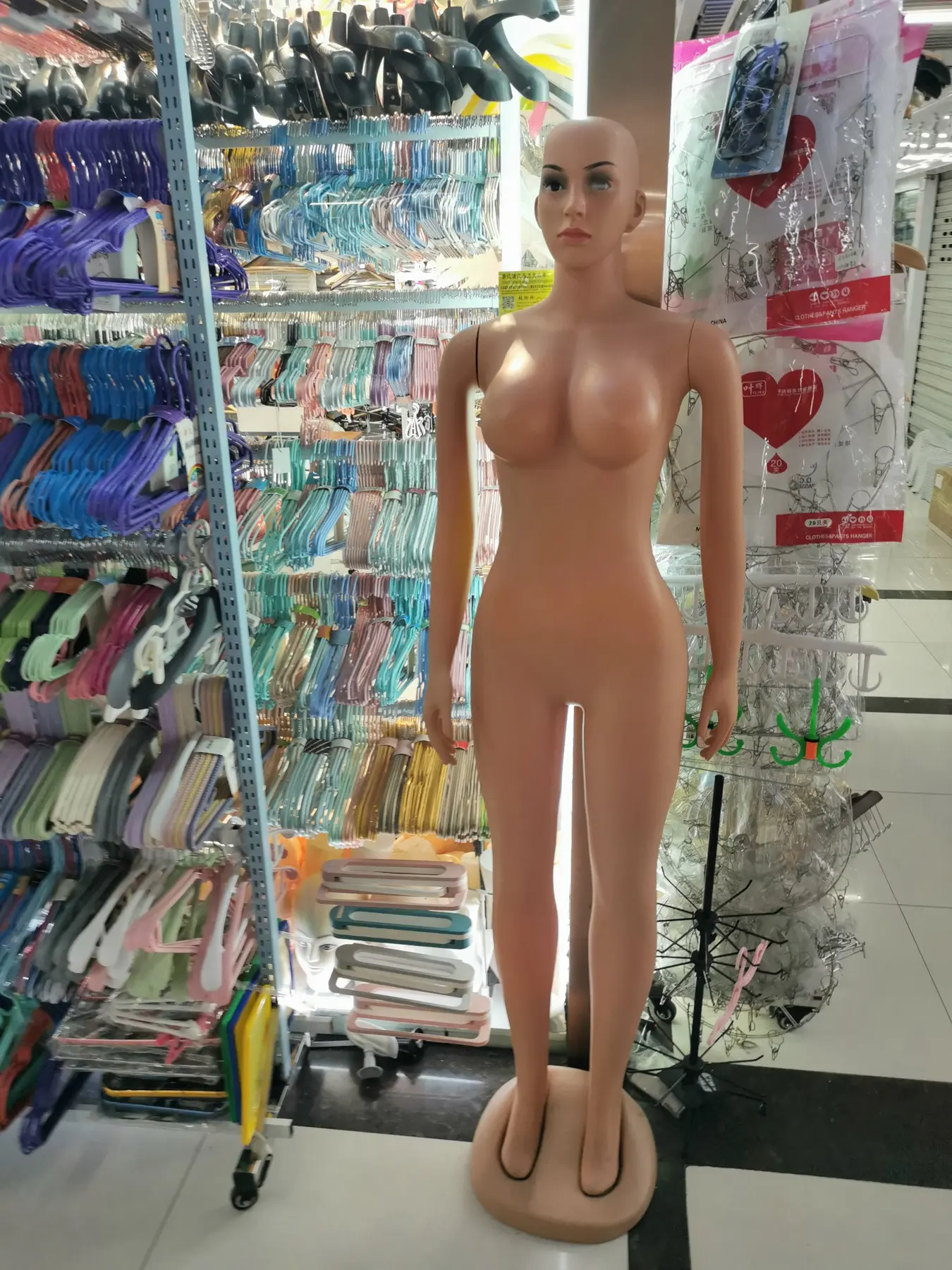
A full-body mannequin stands amid hundreds of clothes hangers arranged by form and colour, placing the generic body inside the infrastructure designed to organise its absent garments.
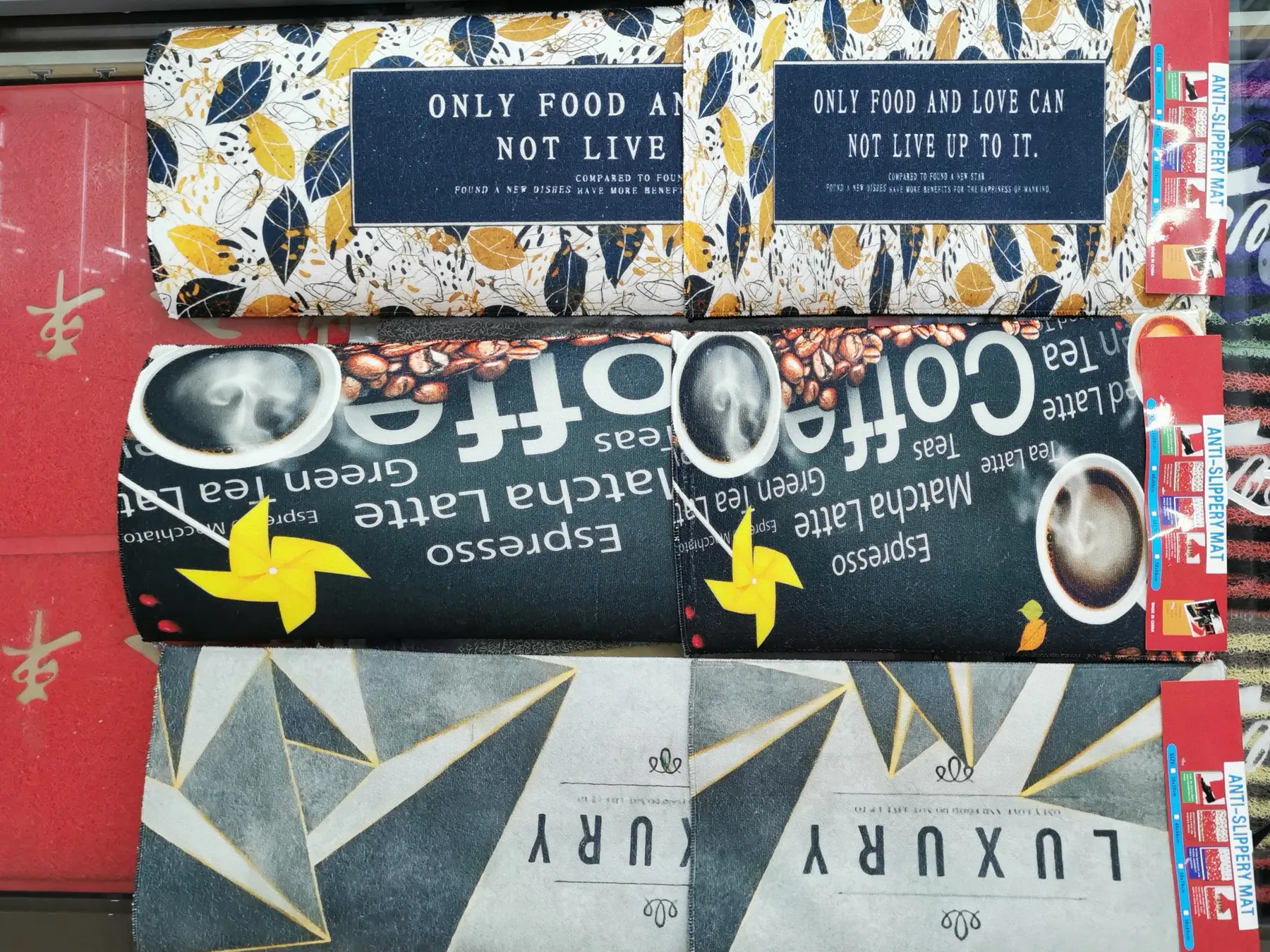
Anti-slip doormats reproduce coffee imagery, decorative foliage and fragmentary English lifestyle slogans, translating an imagined café culture into interchangeable domestic surfaces.
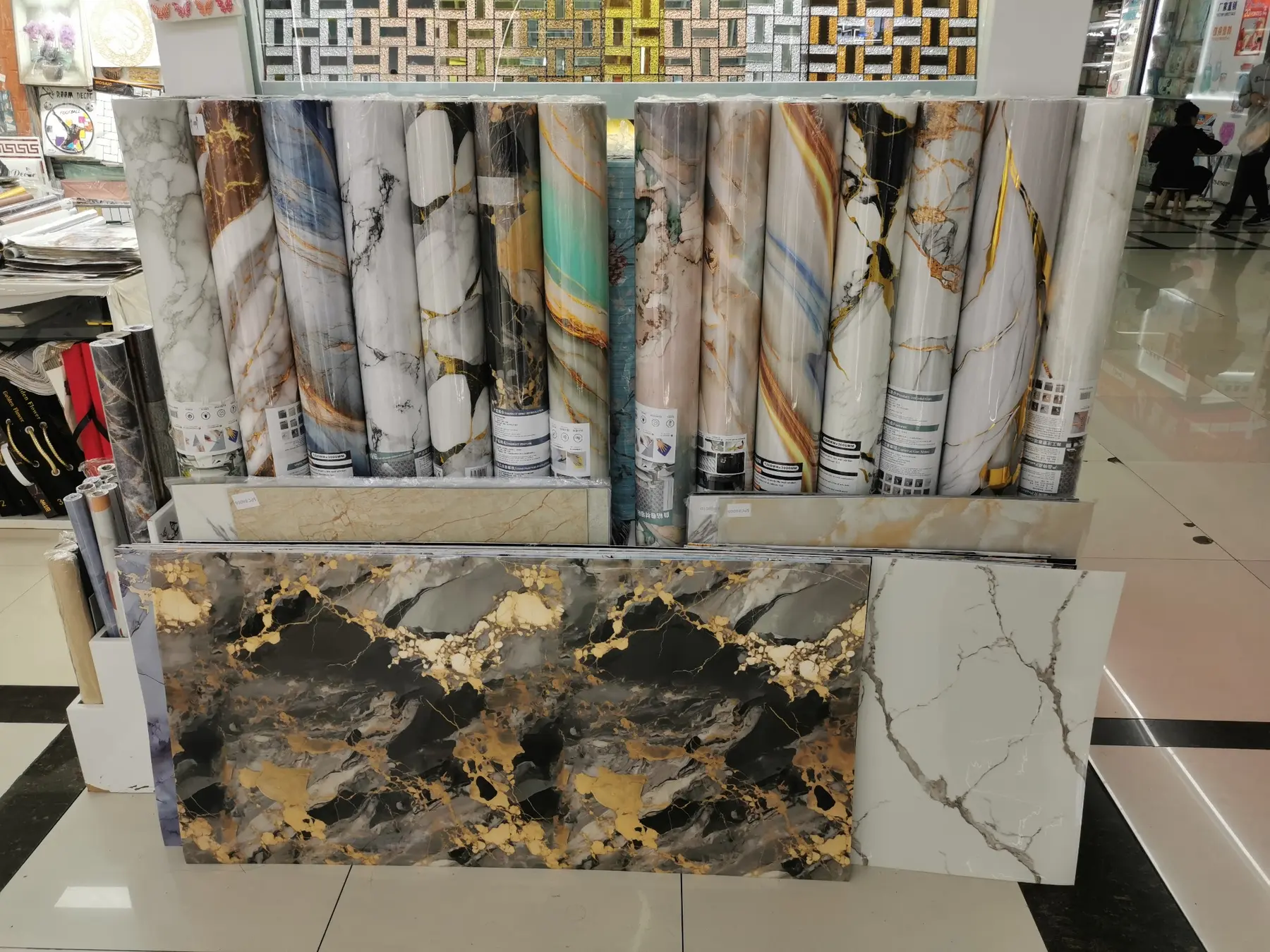
Rolls and rigid panels reproduce marble veining in amplified colours, turning the visual authority of stone into a lightweight, repeatable and transportable surface.
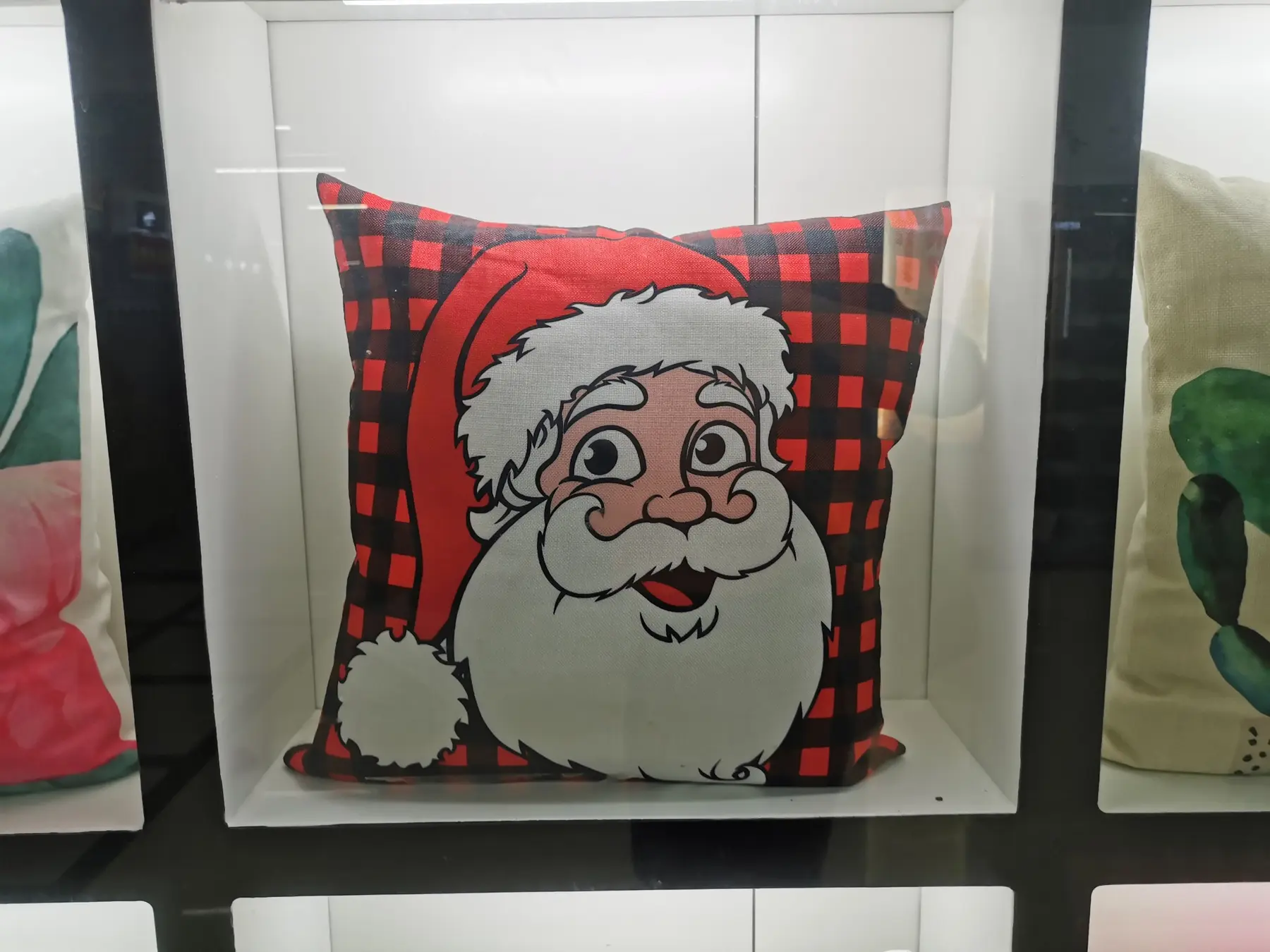
A smiling Santa Claus cushion sits inside a lit display compartment in early October, presenting Christmas as an image and an inventory condition before the occasion arrives.
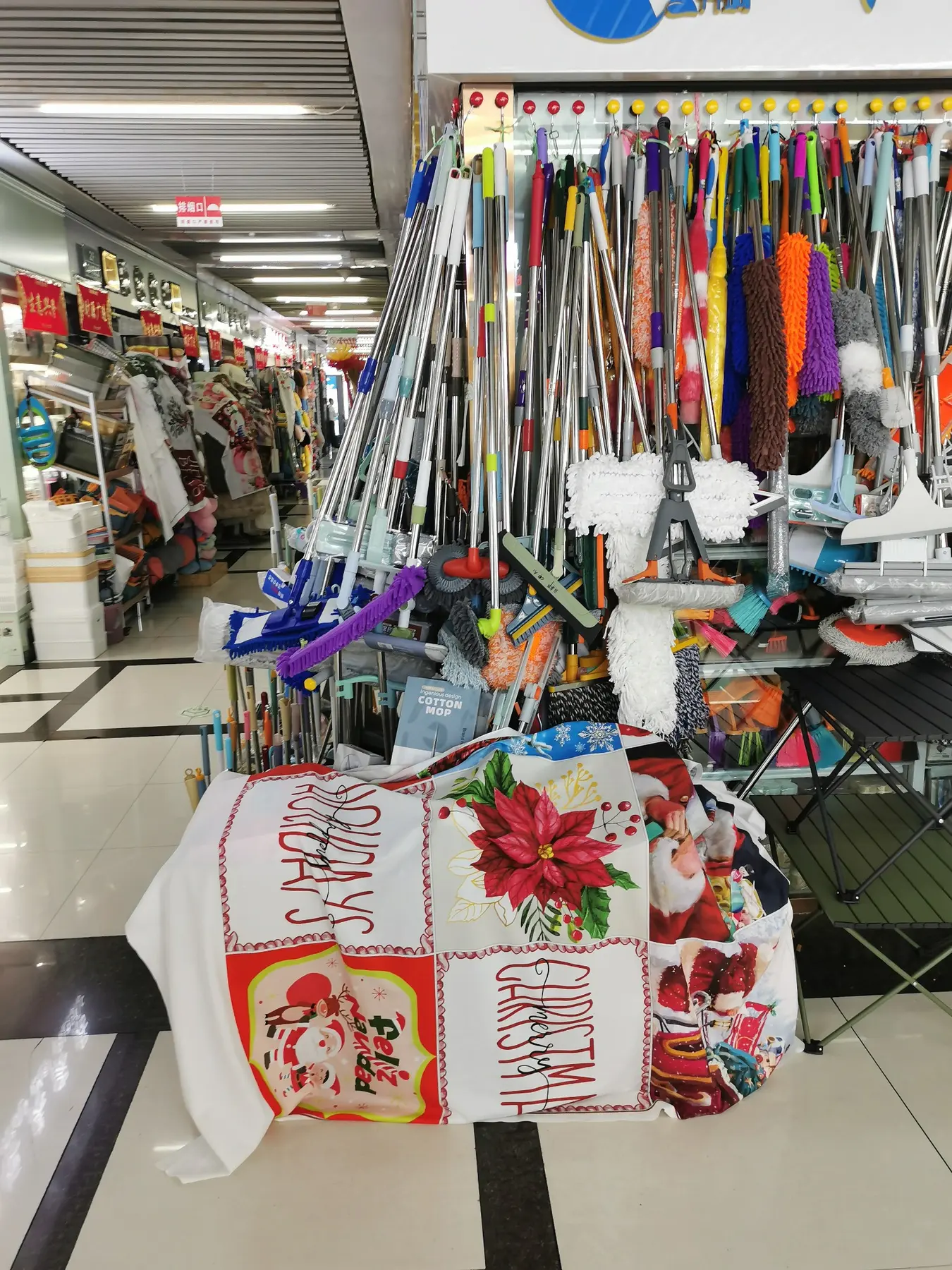
A Christmas-printed textile spills across the floor in front of a dense wall of mops, brushes and cleaning tools, placing a future celebration inside the everyday infrastructure of maintenance.
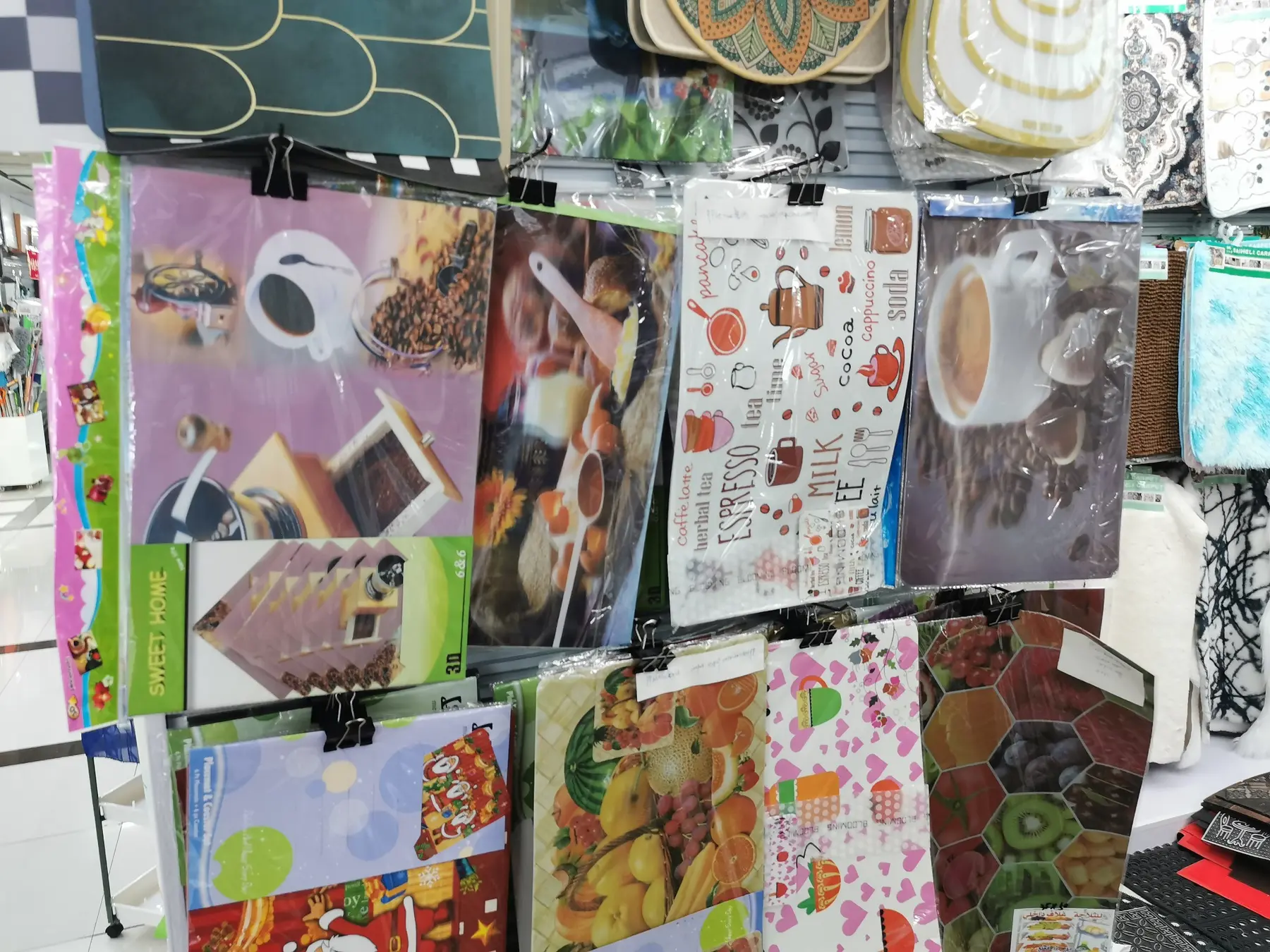
Printed mats and domestic coverings reproduce coffee cups, fruit, kitchen scenes and fragmentary English phrases, translating aspirational food imagery into interchangeable household surfaces.
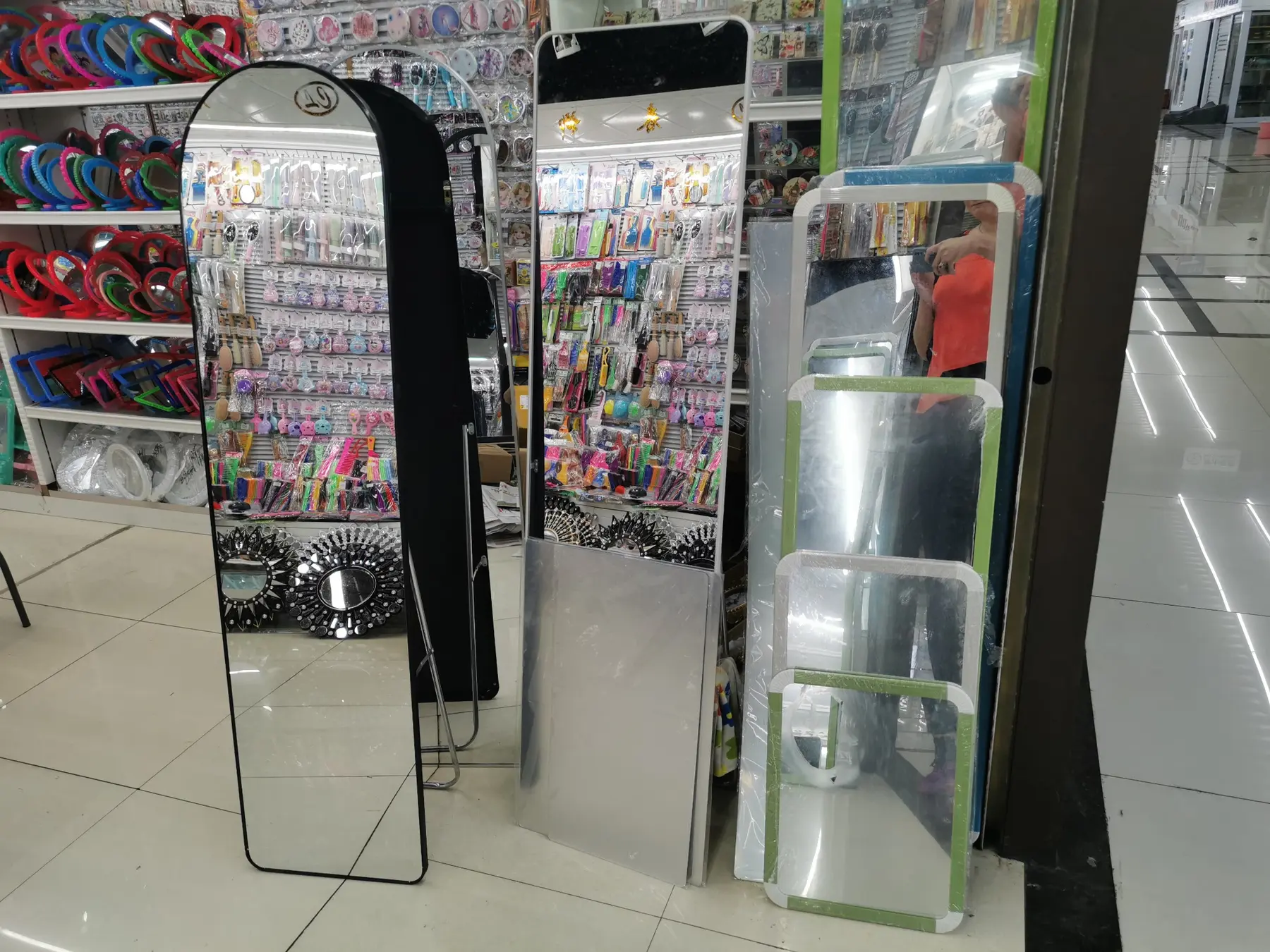
Full-length mirrors lean against the booth edge and reflect neighbouring racks of minor goods, merging merchandise, corridor and photographer within the same temporary display.
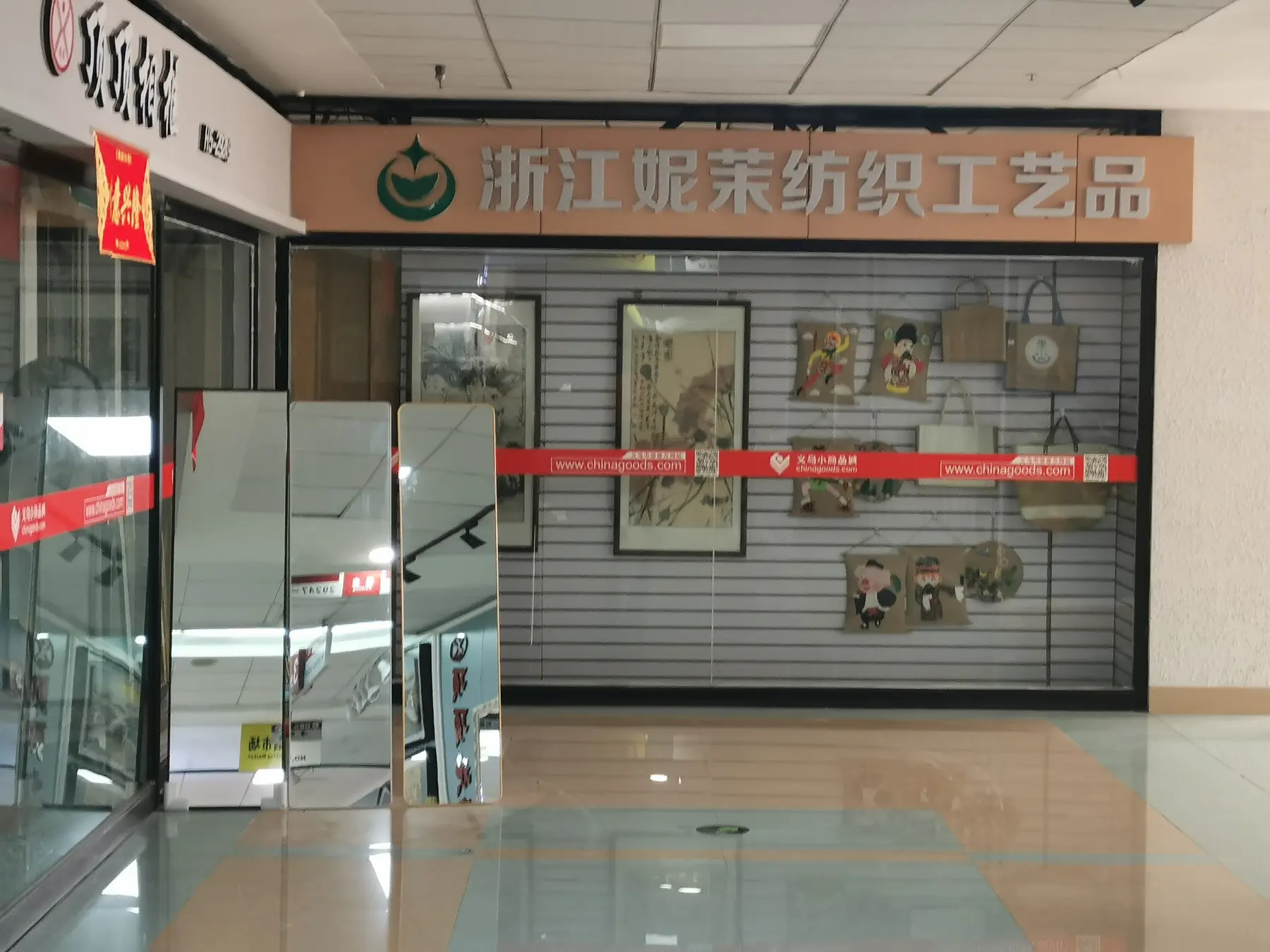
Two full-length mirrors remain in the corridor outside a sparsely stocked textile-handicrafts booth, marking the boundary between vacancy, storage and display.
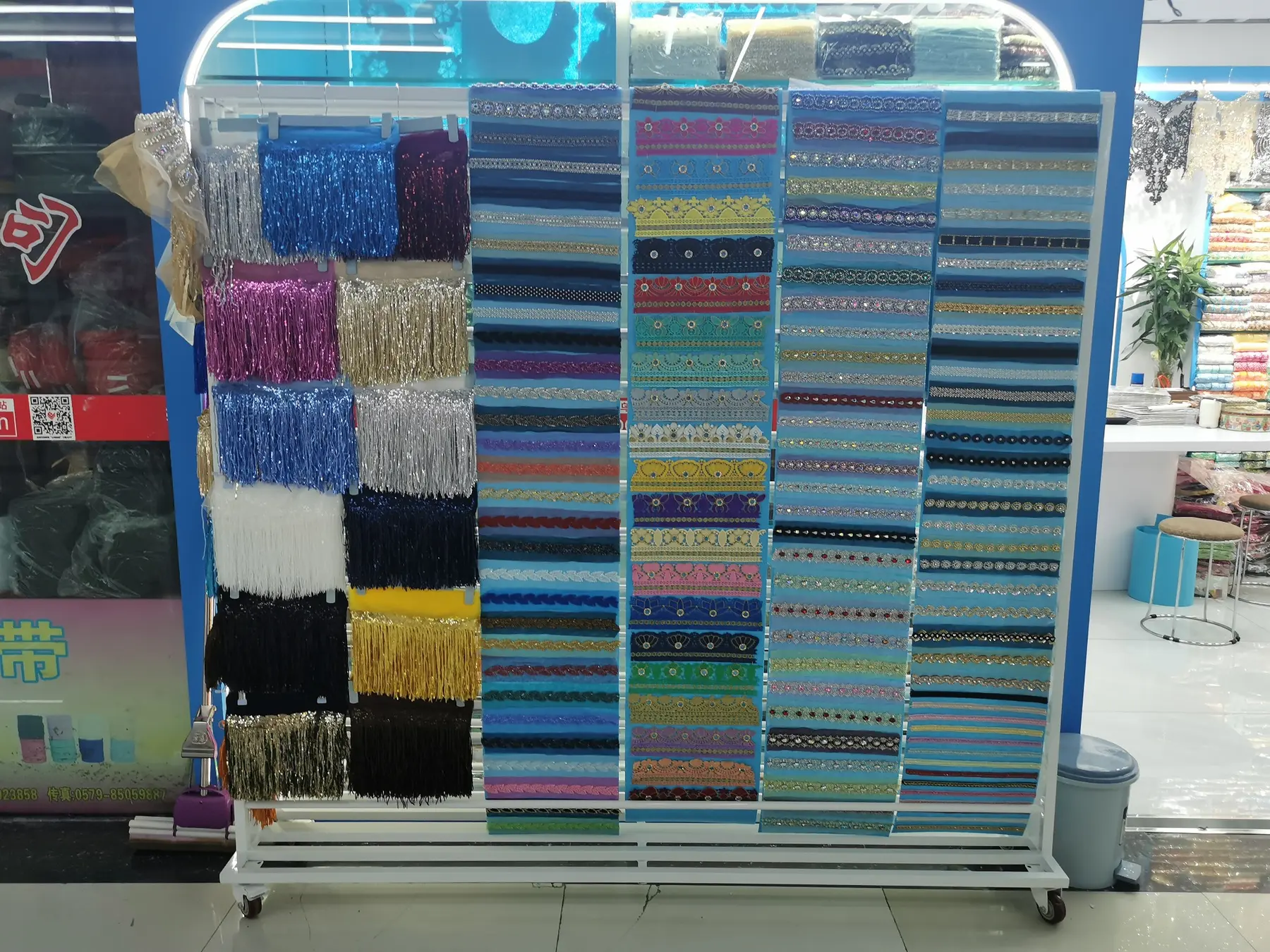
Rows of metallic fringe, braid, lace and embroidered trim are organised across tall blue sample boards, converting continuous textile lengths into a visible comparative taxonomy.
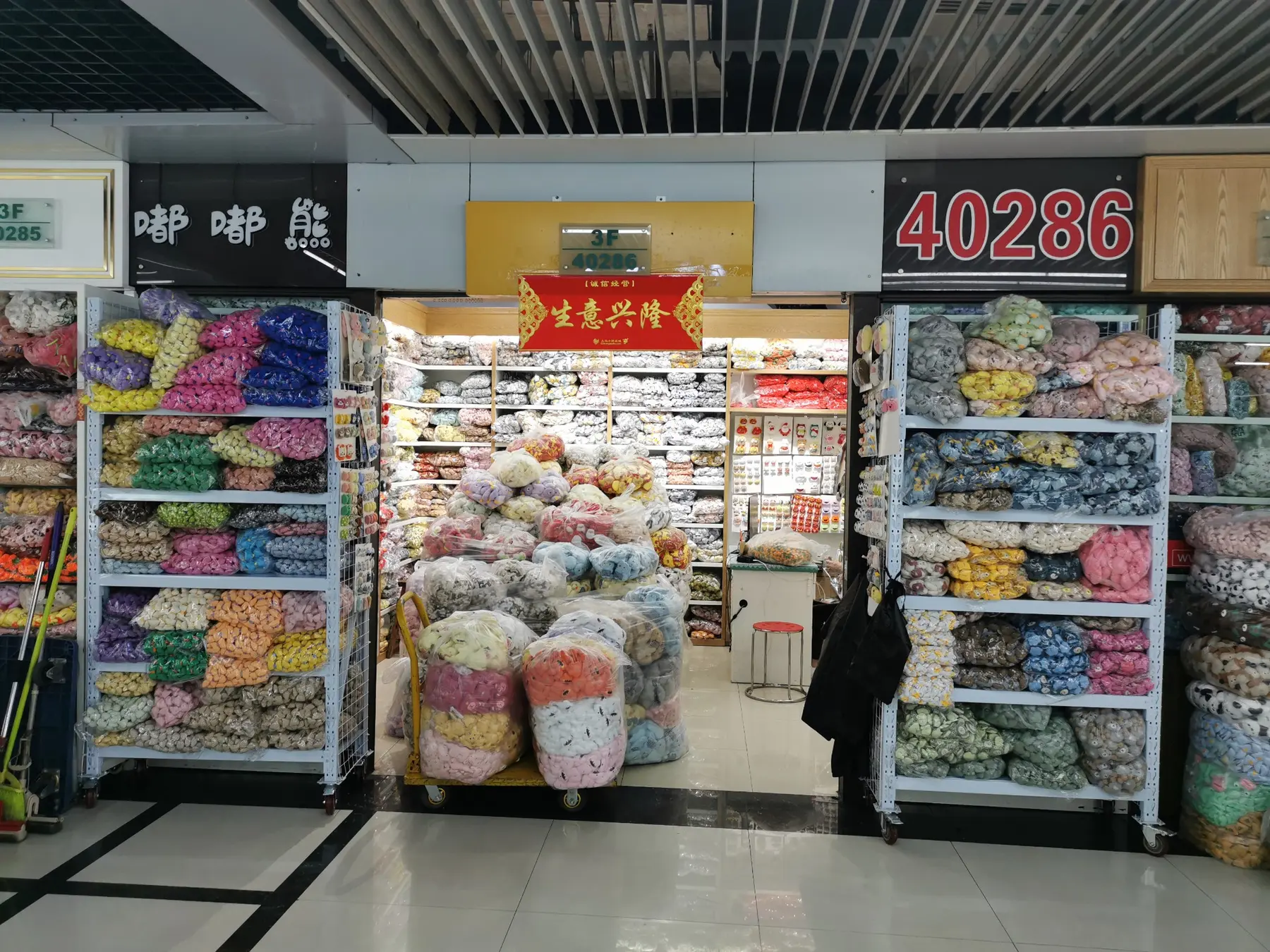
Bags of small soft textile components fill shelves and wheeled carts in repeated colour families, turning loose material into dense units ready for wholesale circulation.
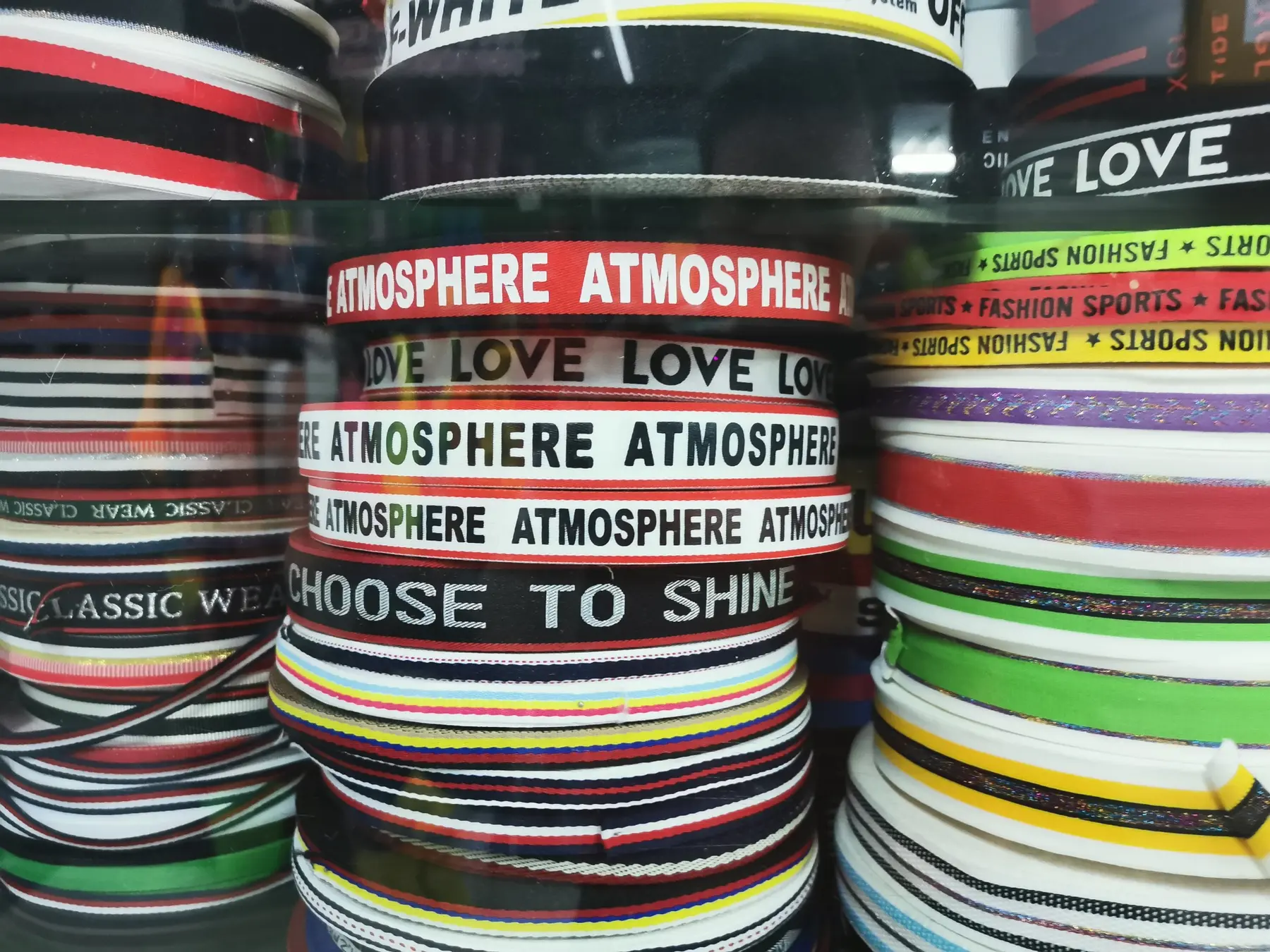
Spools of striped webbing carry the phrases “Atmosphere,” “Love,” “Fashion Sports” and “Choose to Shine,” converting free-floating English aspiration into repeatable decorative trim.
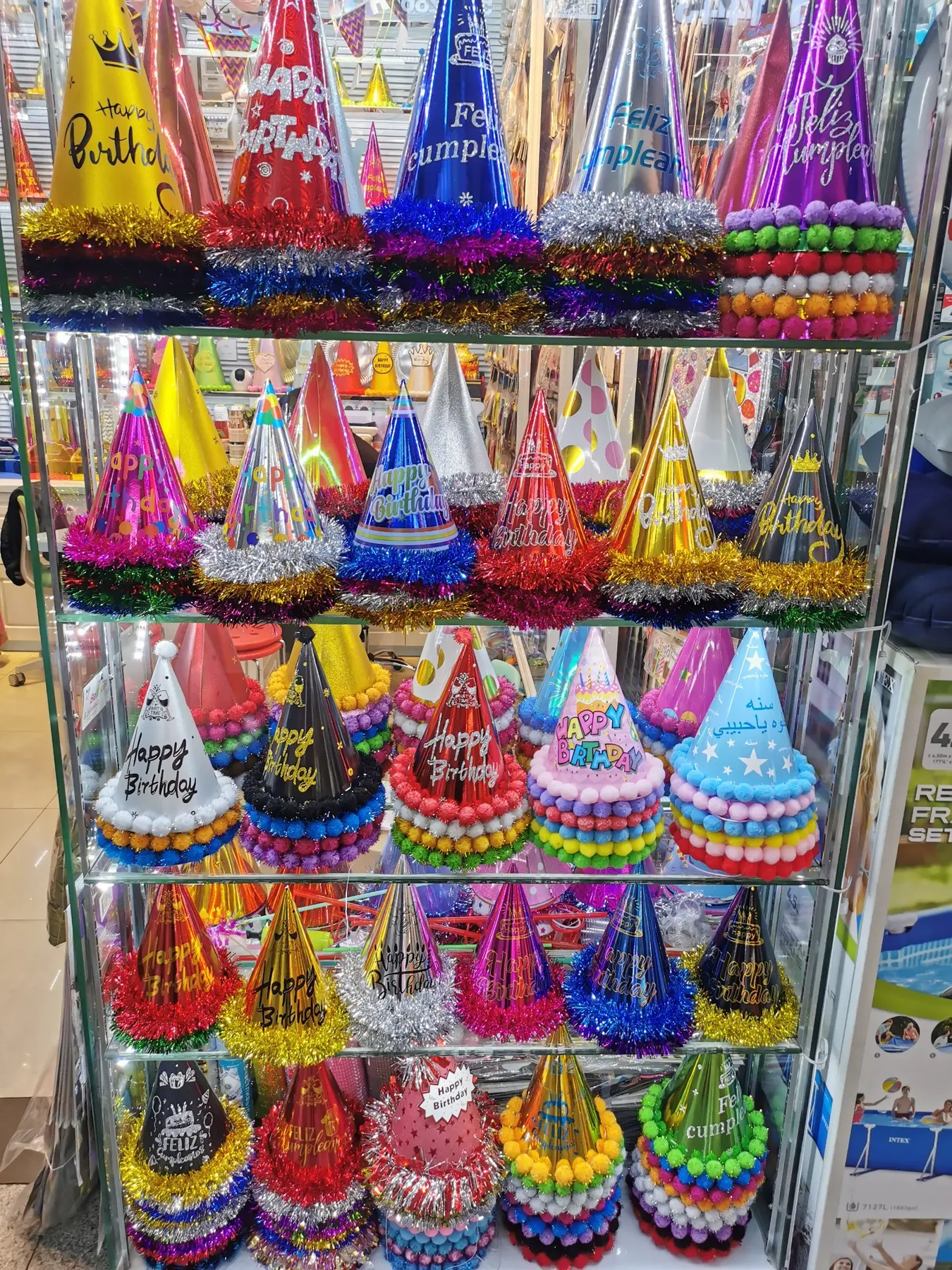
Metallic cone hats repeat across a glass cabinet in multiple colours and languages, manufacturing the same future birthday as a flexible, internationally legible inventory.
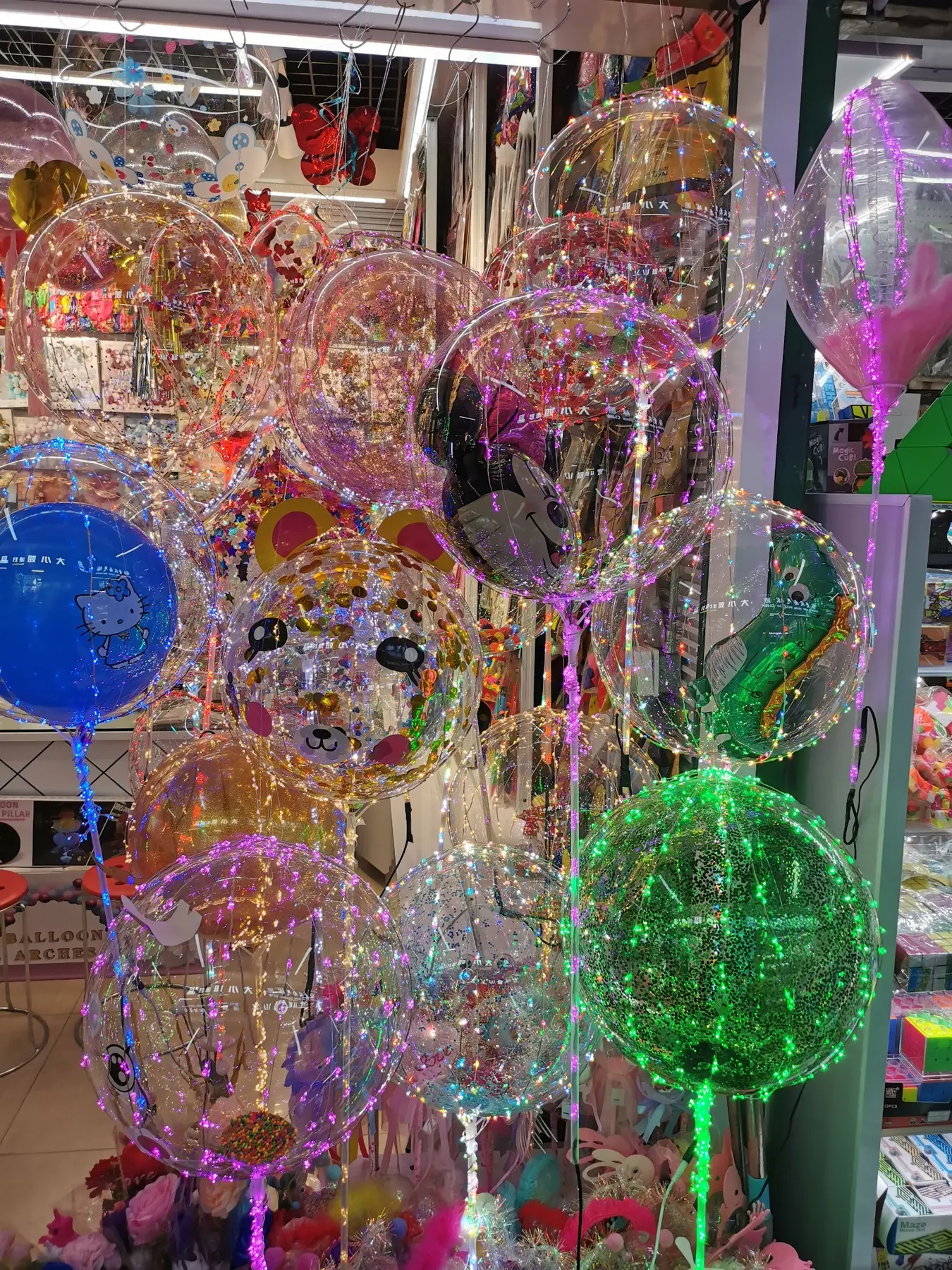
Transparent balloons threaded with coloured LEDs and suspended glitter turn a temporary celebration into a ready-made luminous atmosphere that can be carried elsewhere.
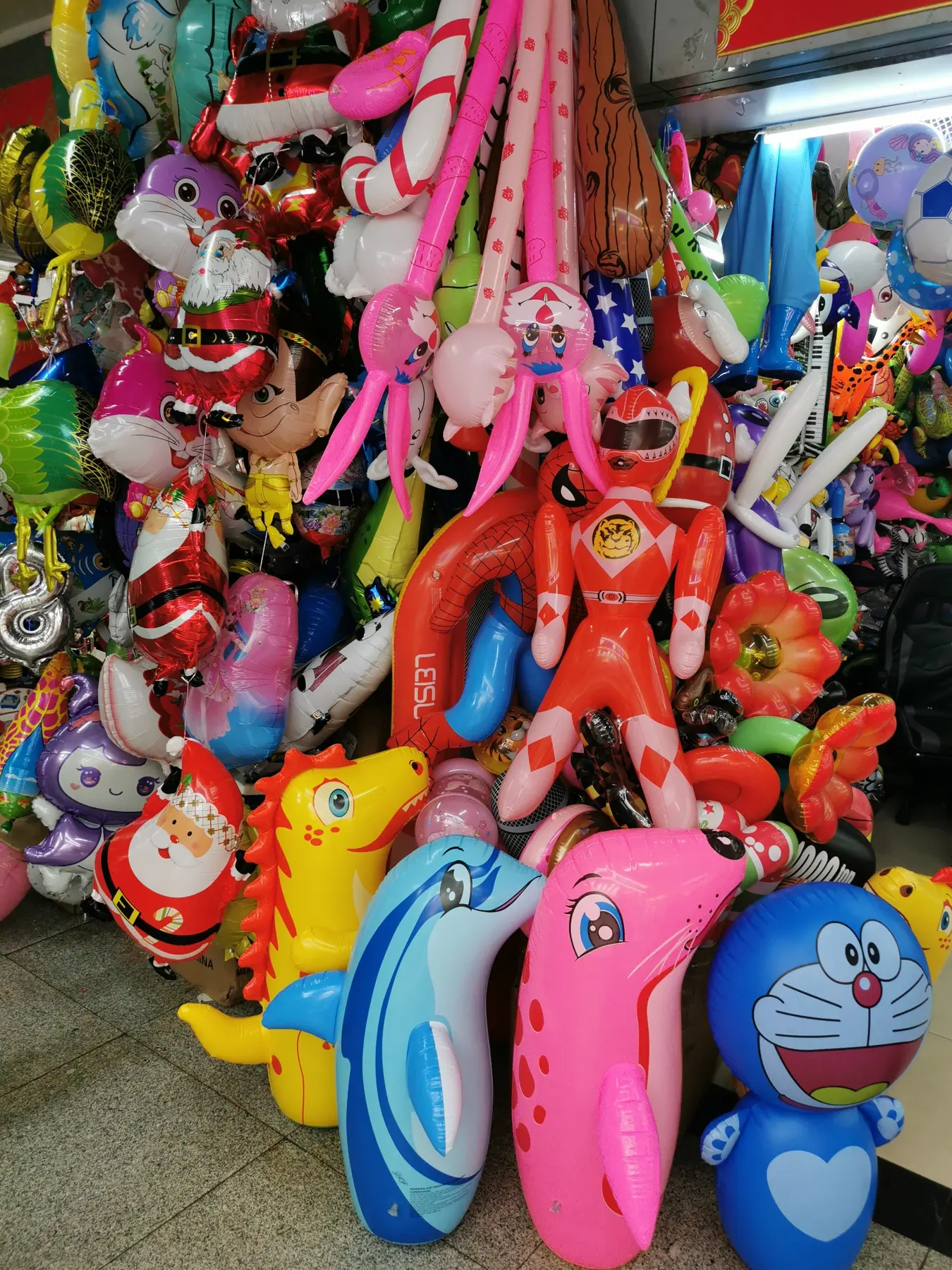
Recognisable cartoon, superhero, animal and seasonal figures accumulate as inflatable bodies, compressing distinct fictional worlds into a single crowded product ecology.
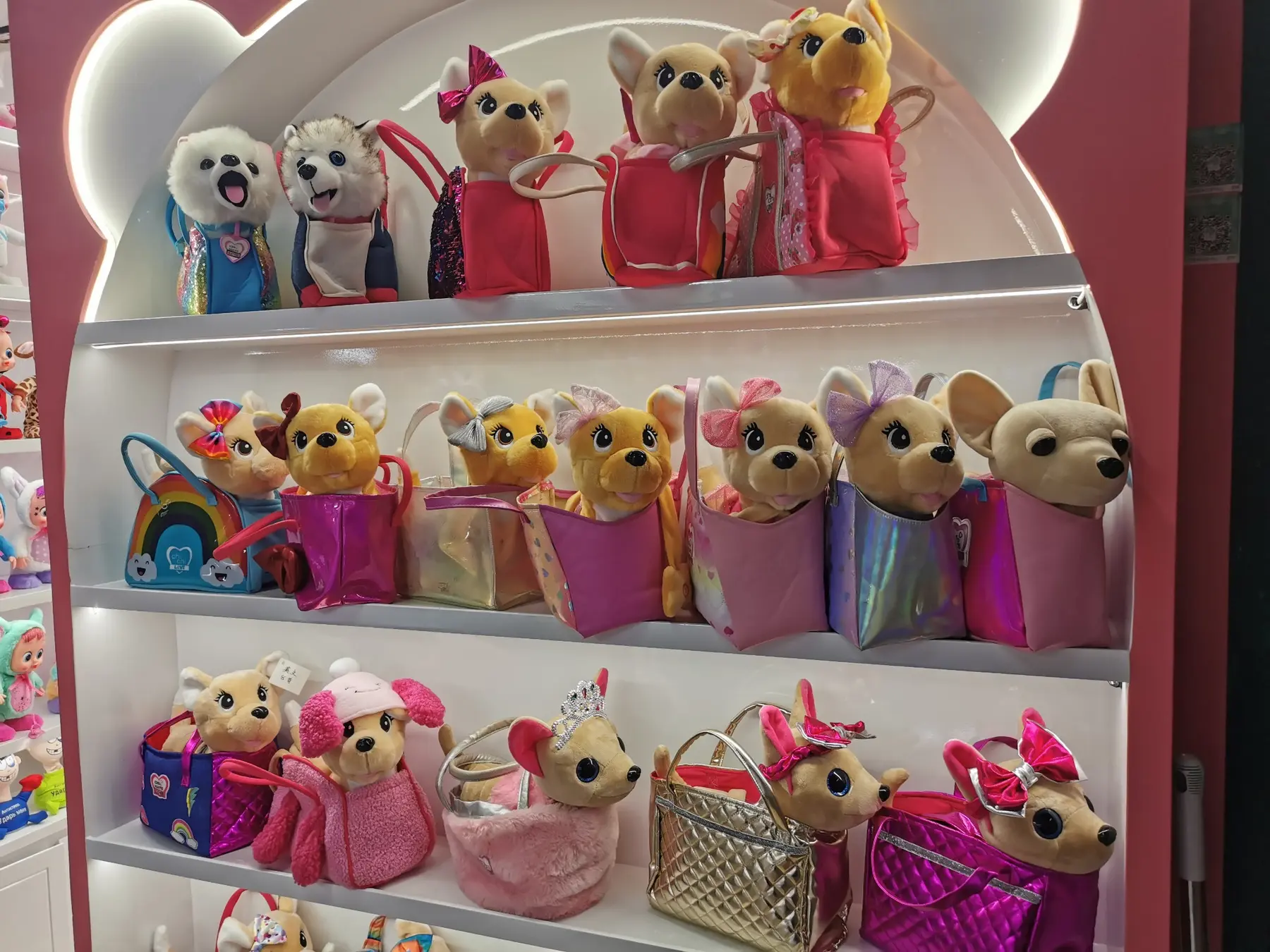
Plush dogs sit inside miniature handbags across illuminated shelves, merging pet, toy and fashion accessory into a repeated family of portable companions.
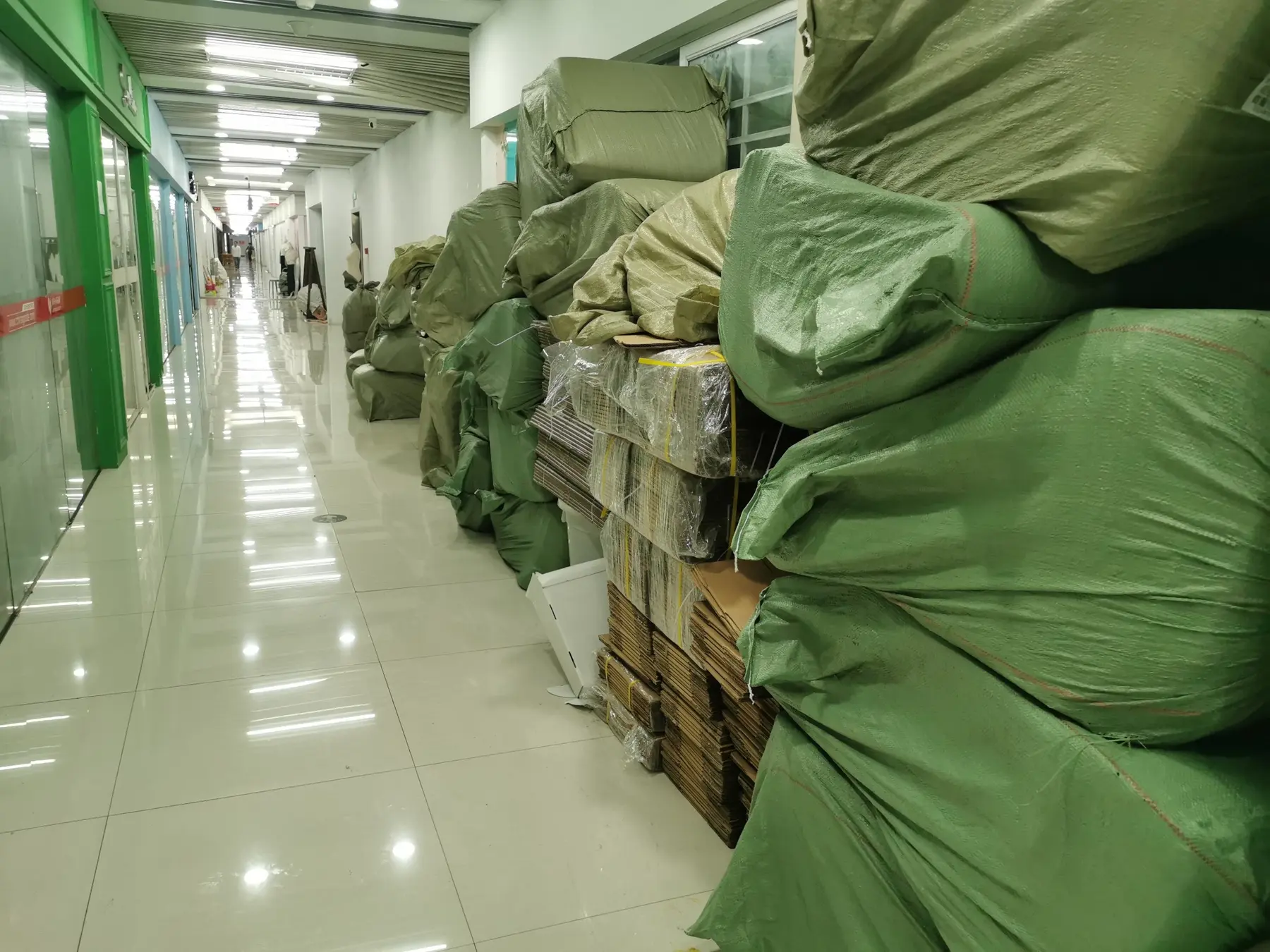
Oversized green freight sacks and bundles of flattened cardboard occupy the edge of an otherwise polished corridor, making the hidden volume of packed goods briefly architectural.
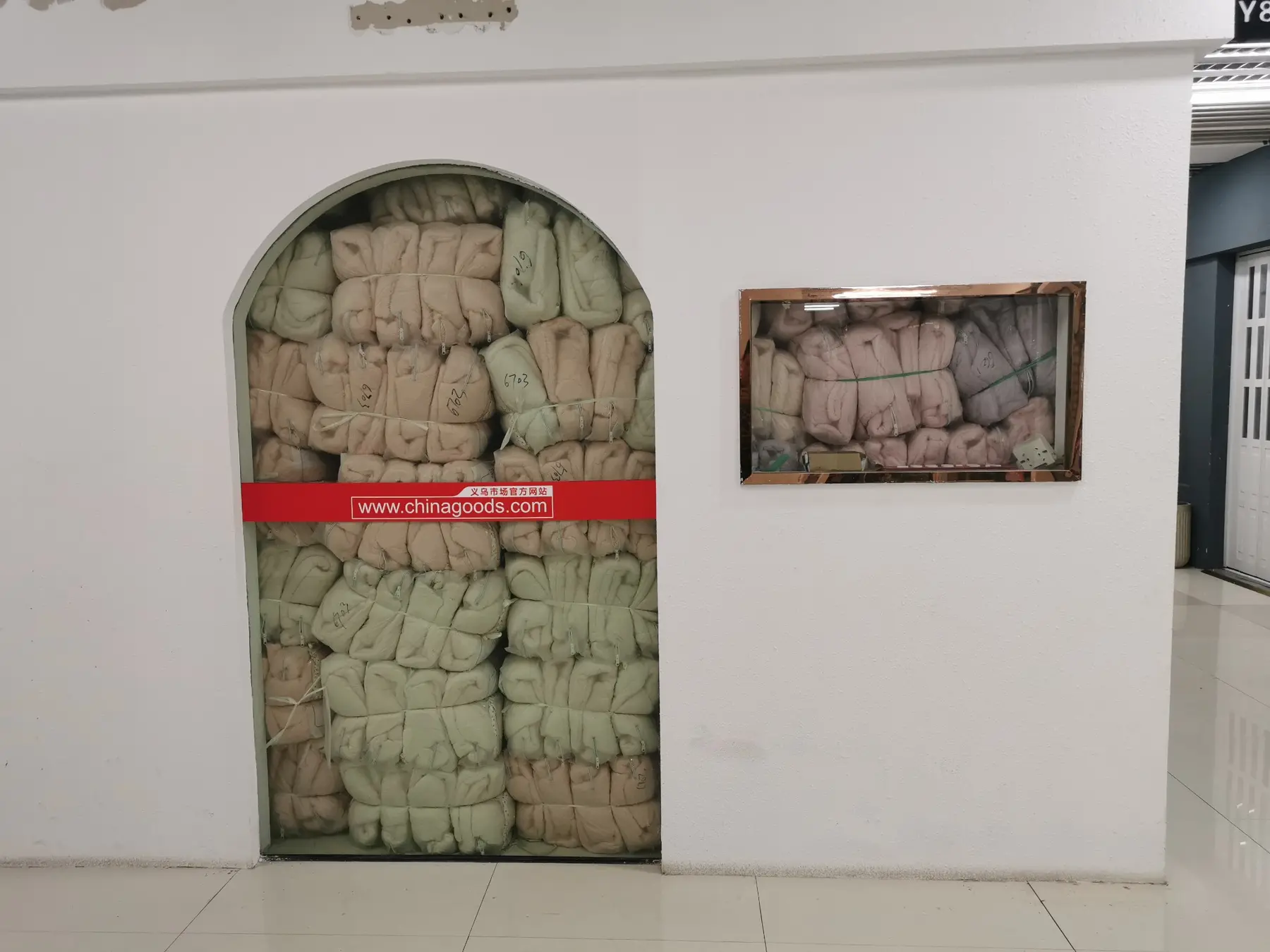
Compressed bundles of pastel textiles fill an arched doorway and adjacent window, turning the sealed booth façade into a cross-section of stock awaiting circulation.
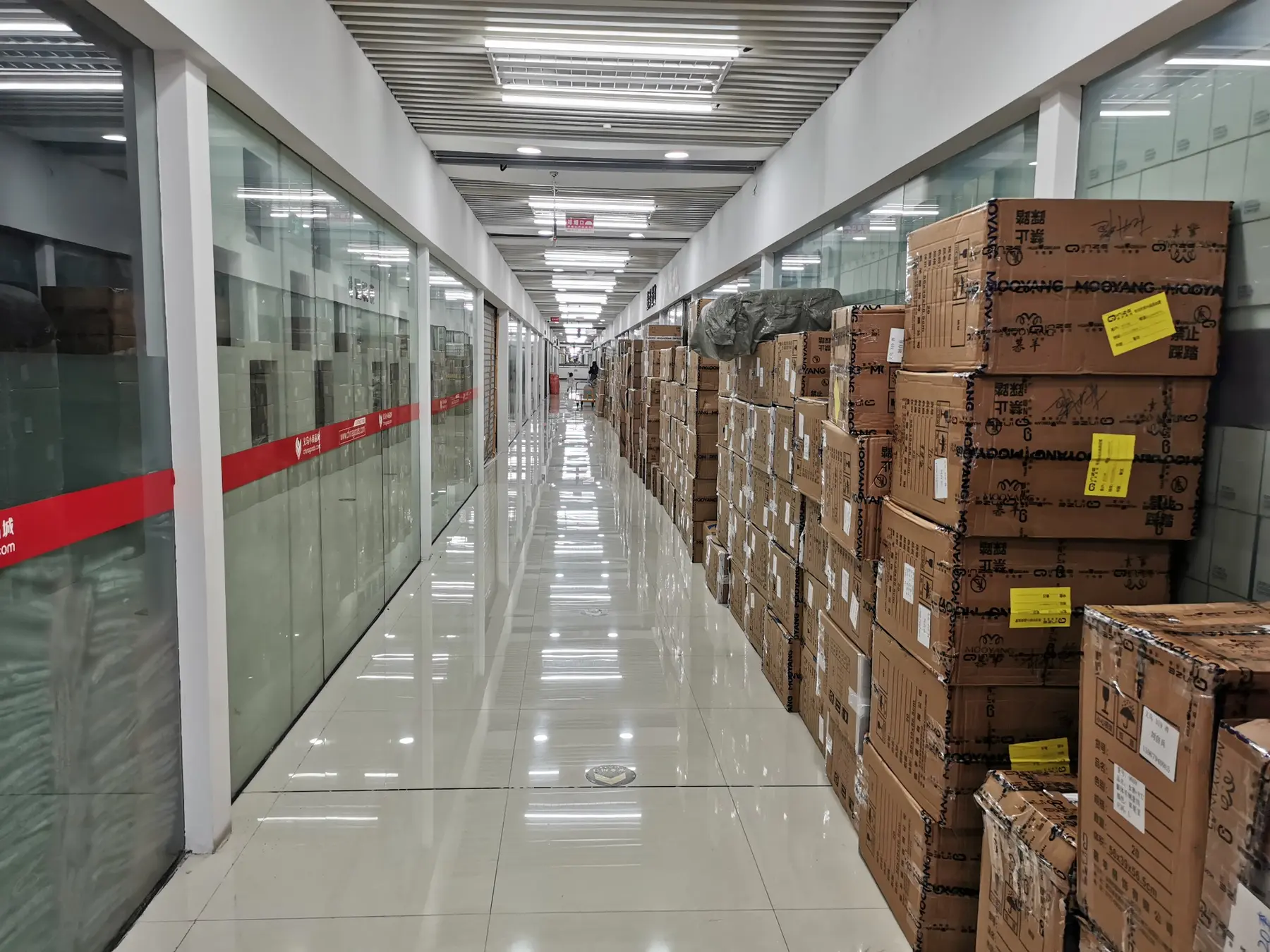
Labelled cartons form an extended wall along a polished corridor of closed glass-fronted booths, converting circulation space into a temporary warehouse.
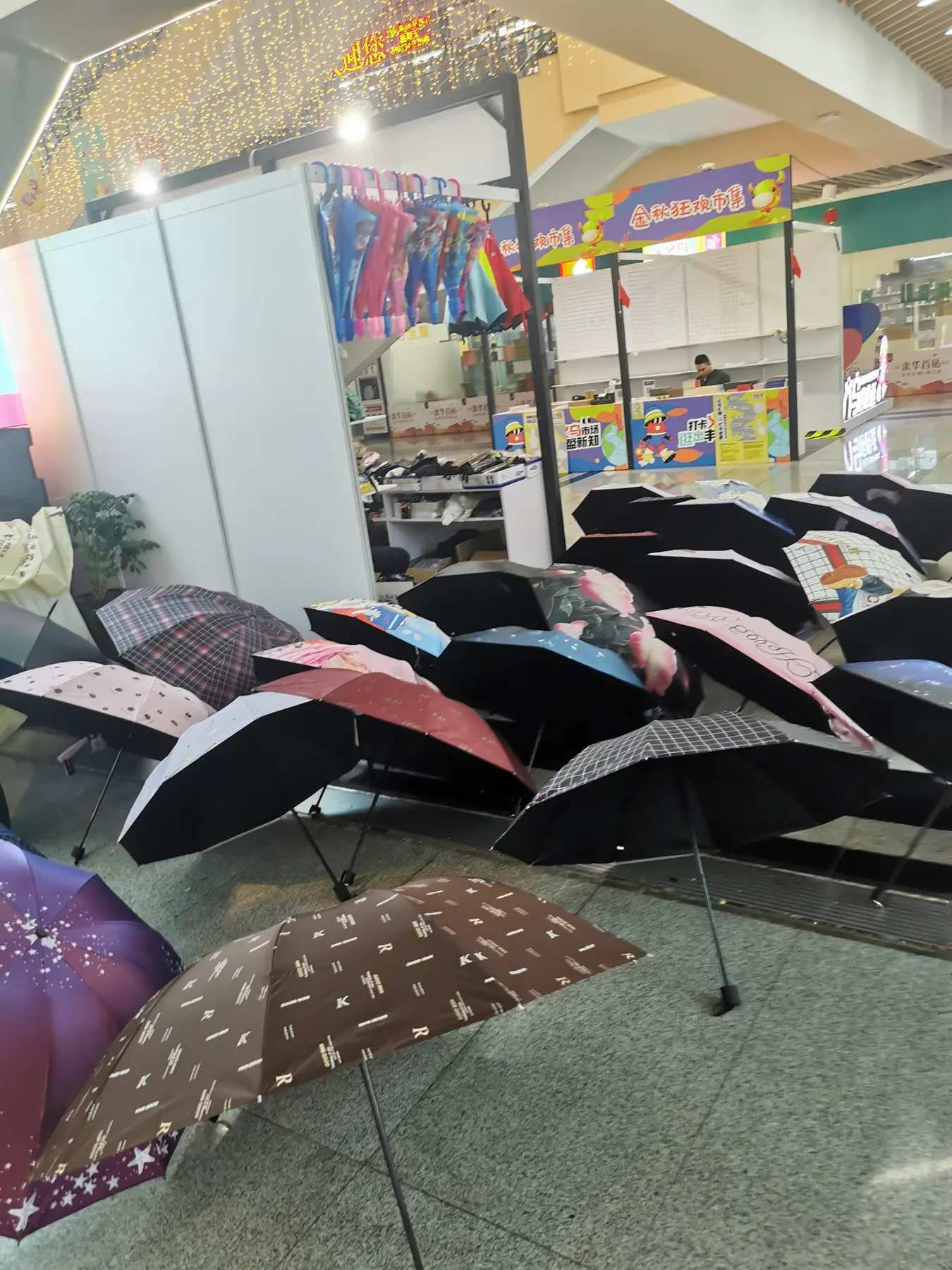
Open umbrellas overlap across the booth threshold while folded examples hang above, using the floor as an improvised field for comparing patterns, colours and forms.
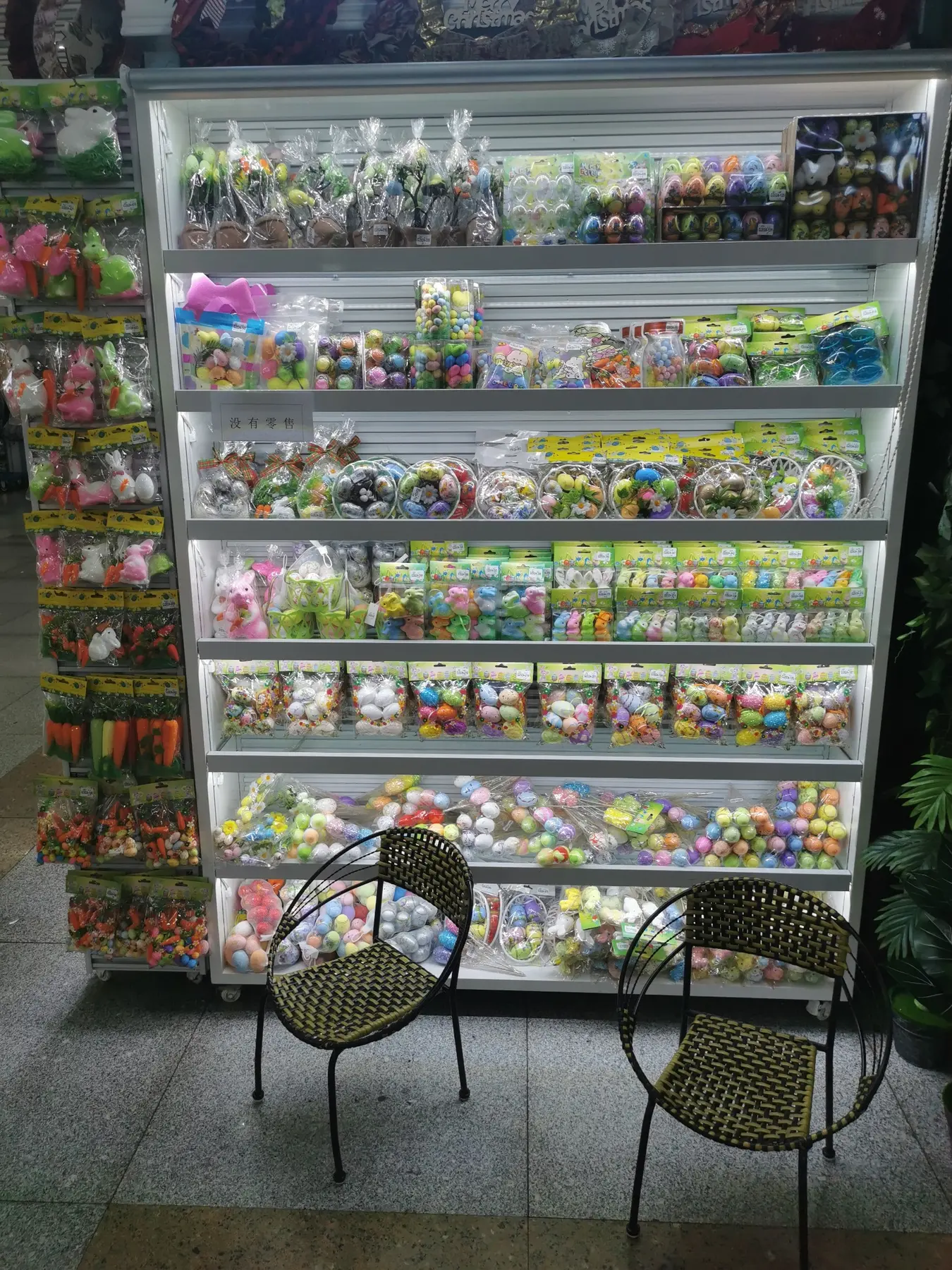
Packets of miniature eggs, vegetables, animals, flowers and trees are sorted into repeated shelf units, making an entire model ecology available as small interchangeable parts.
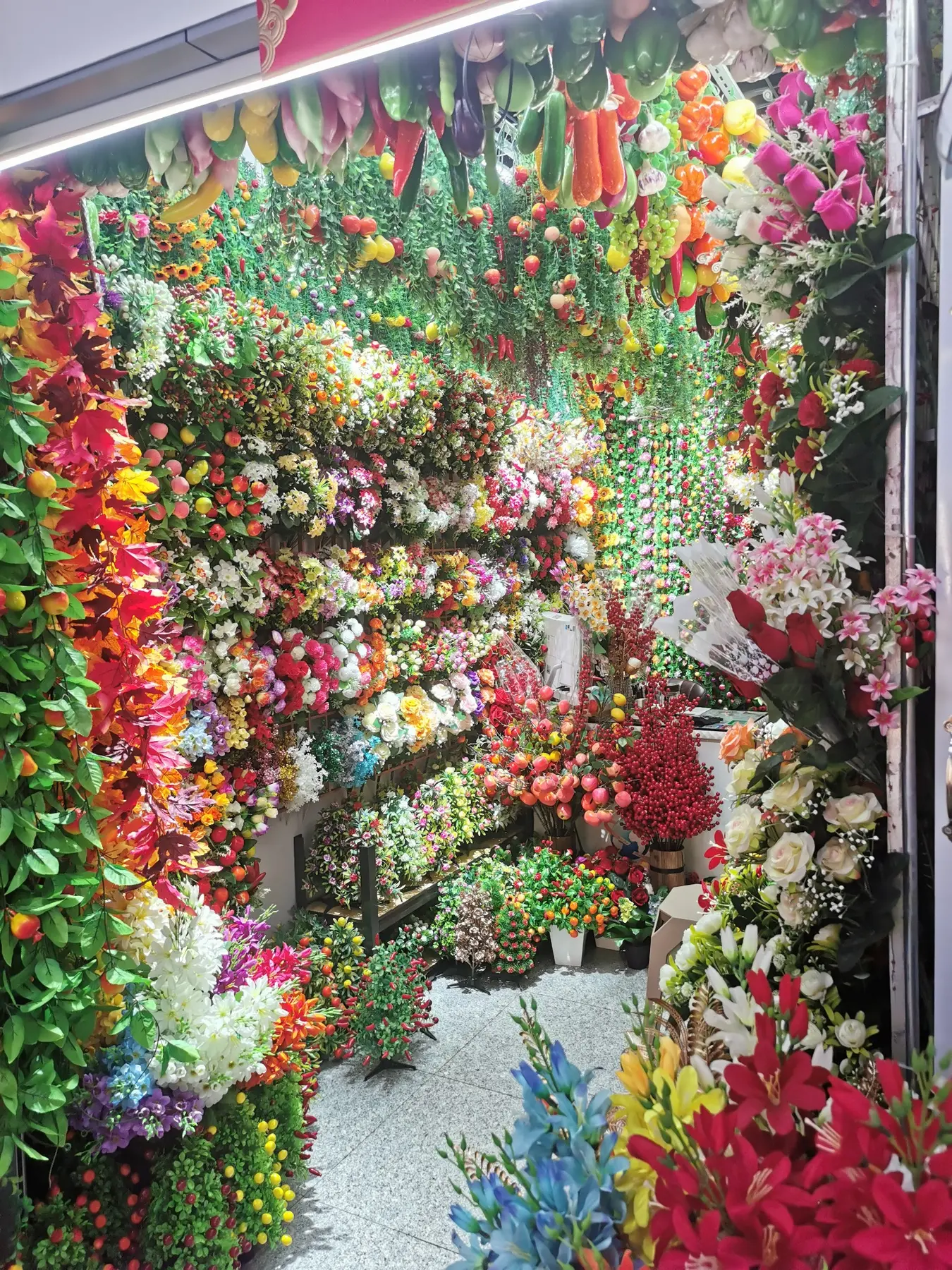
Artificial flowers, berries, leaves and vegetables cover the walls and ceiling of a narrow booth, transforming separate imitation goods into an immersive synthetic habitat.
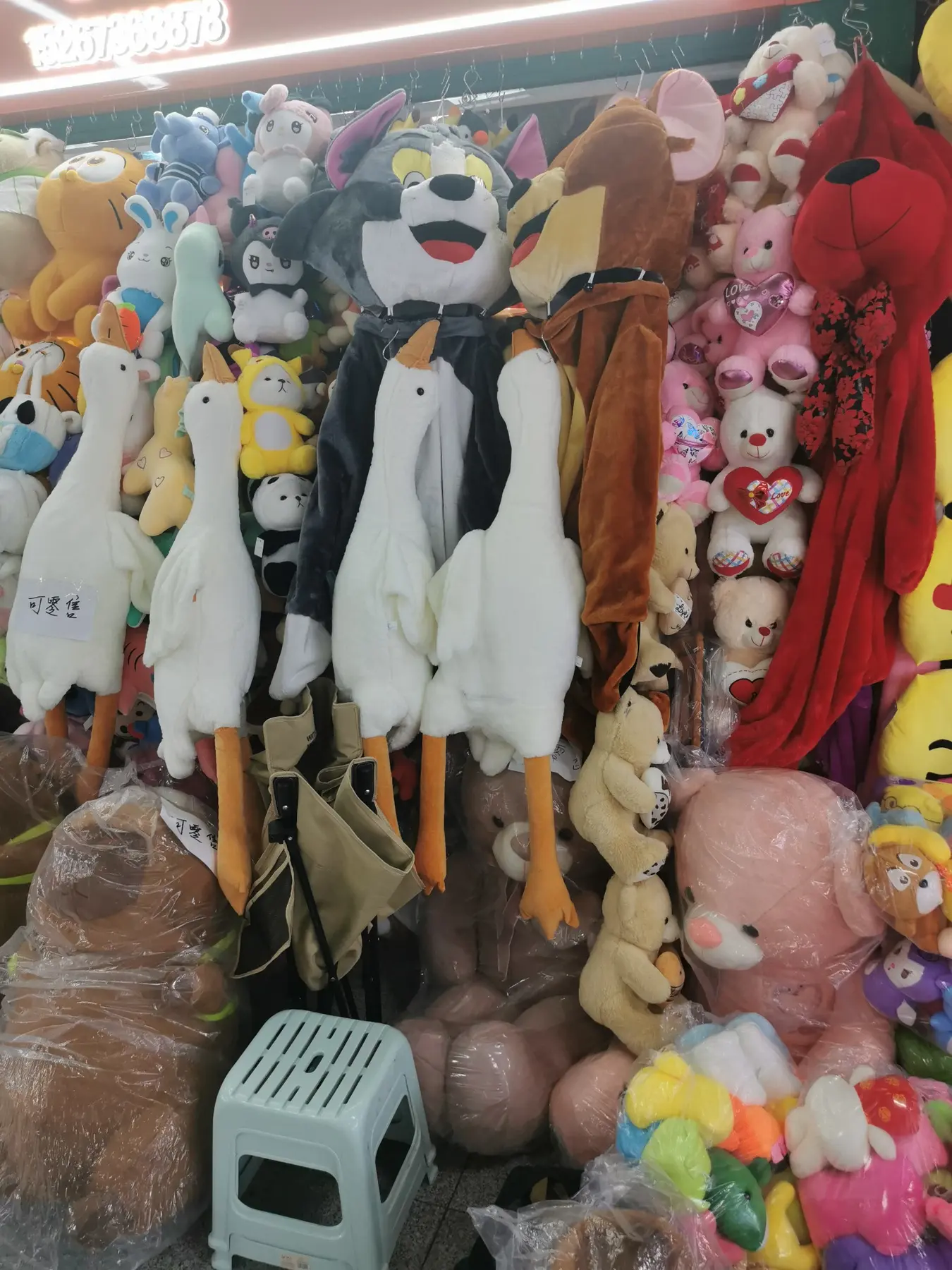
Long geese, bears, rabbits and recognisable character forms hang above bags of compressed soft toys, extending the category across different scales, species and fictional identities.
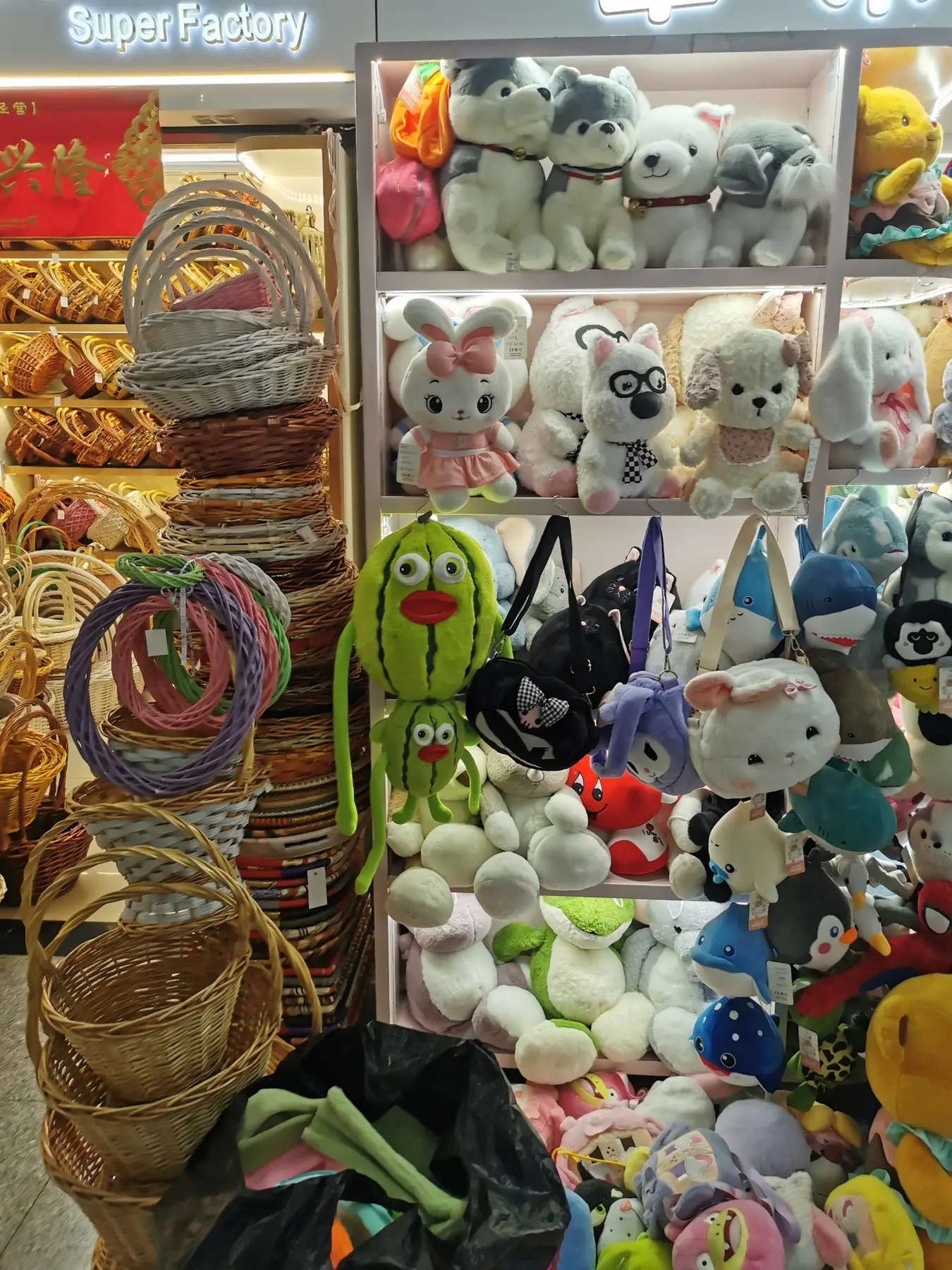
Wicker baskets occupy one side of a narrow display while plush animals and character-shaped bags fill the other, placing two unrelated commodity families inside the same illuminated booth frontage.
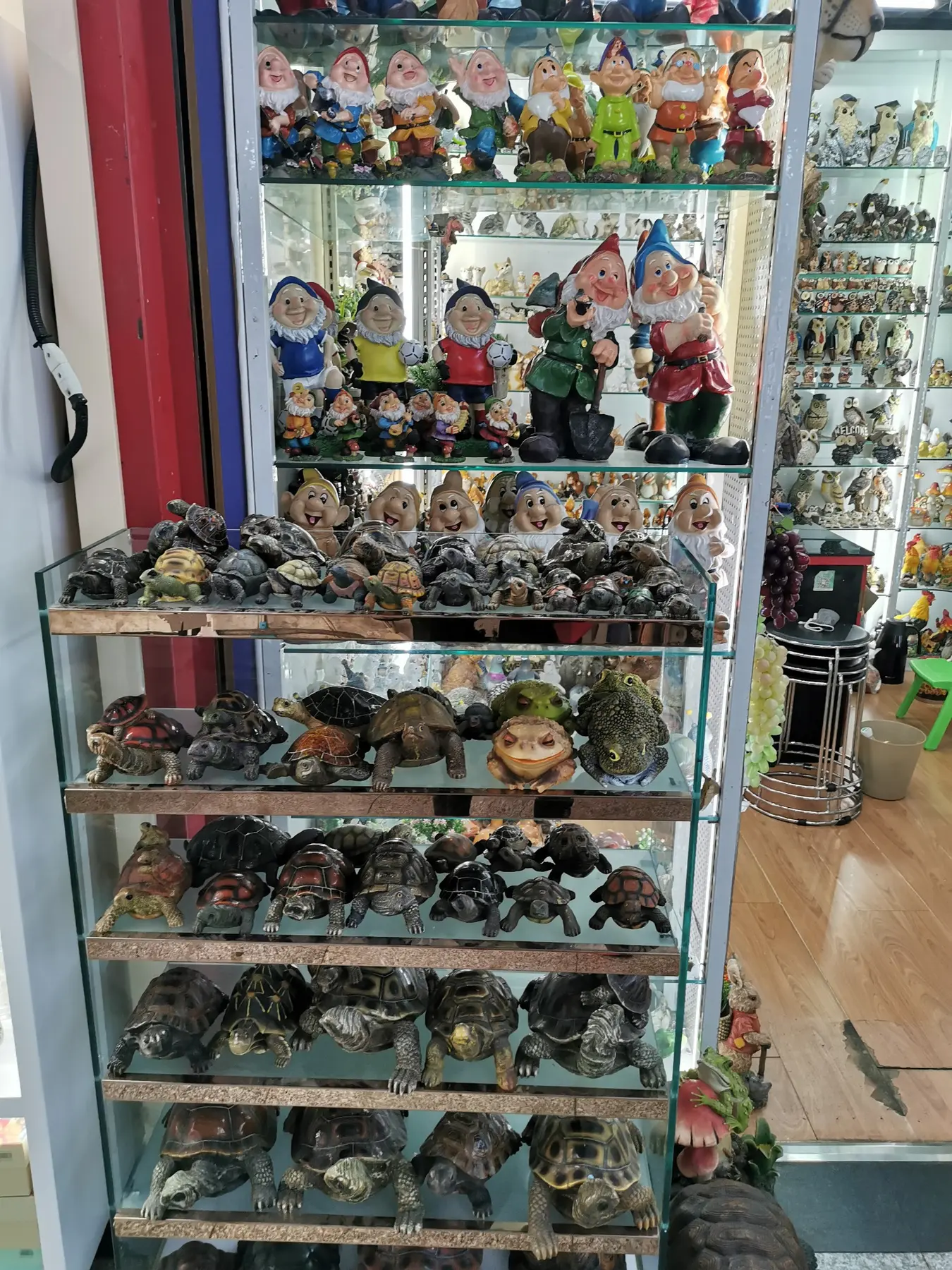
Cheerful garden gnomes occupy the upper shelves while tortoises, frogs and toads repeat below in varied sizes and poses, turning ornamental wildlife into a comparative display taxonomy.
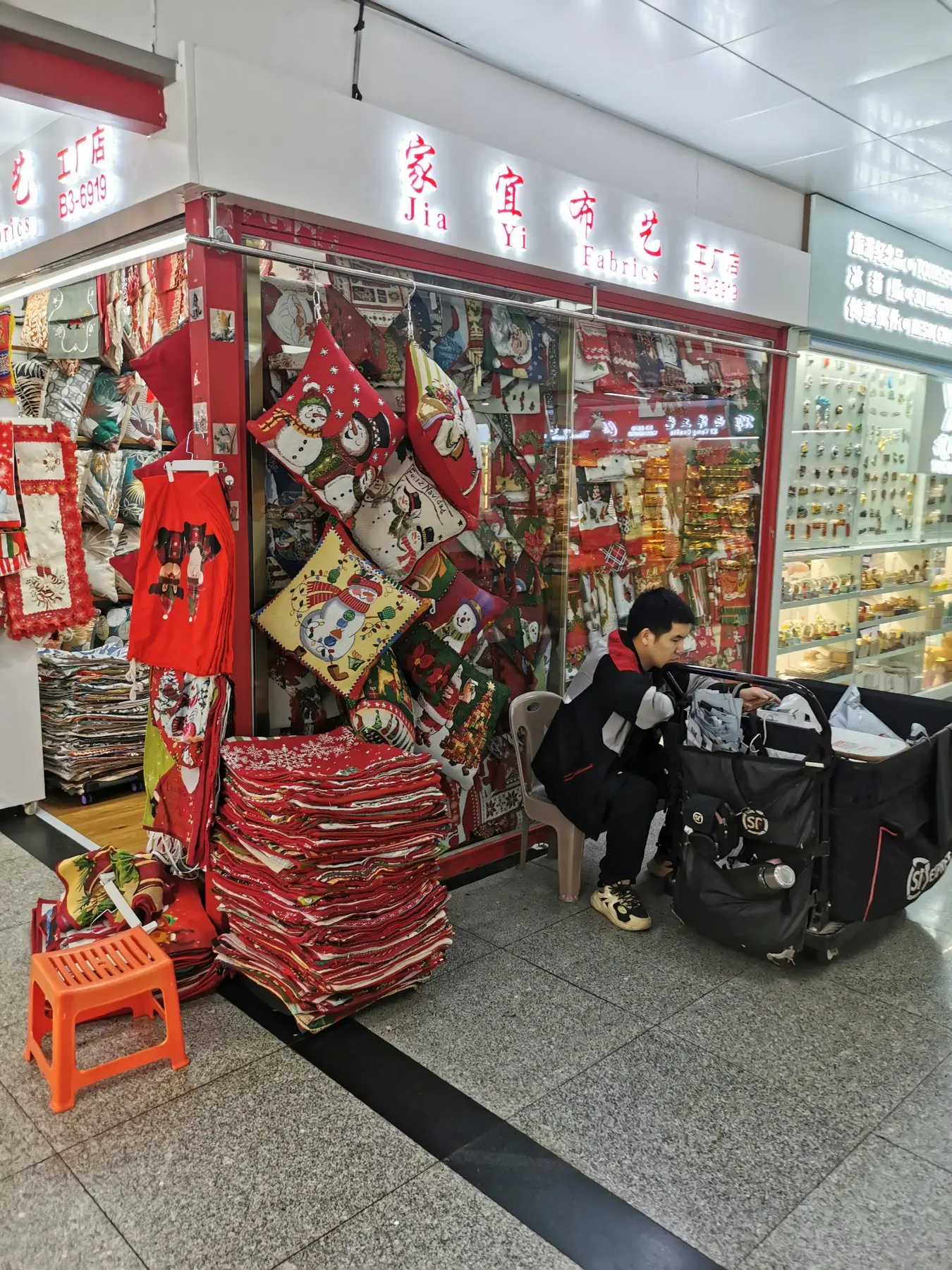
Christmas cushions, stockings and patterned textiles cover the booth walls and accumulate in stacks at the threshold, manufacturing a future holiday as dense red inventory.
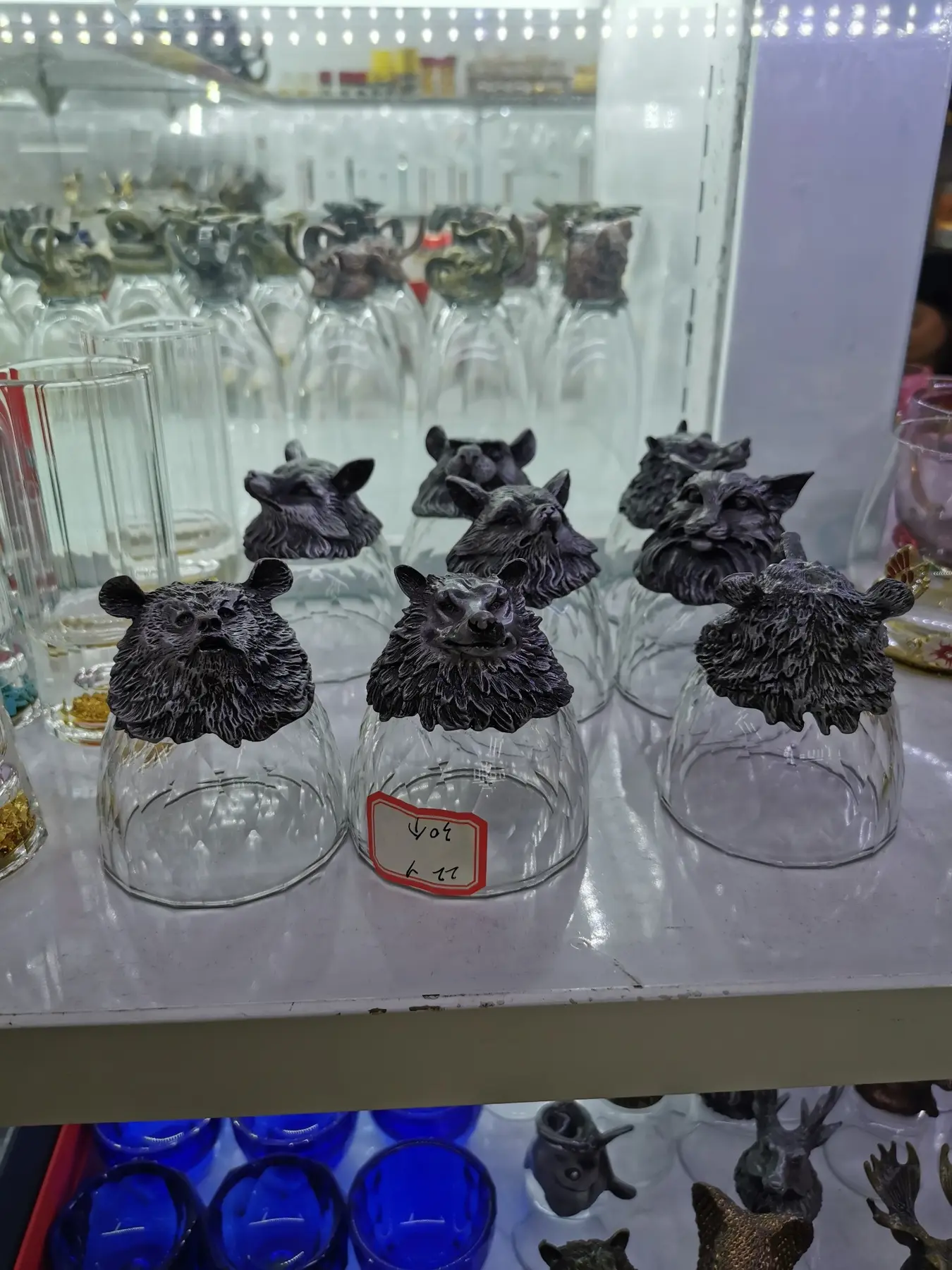
Rows of transparent glass vessels are topped with repeated sculpted bear, wolf and animal heads, combining generic utility with a minor taxonomy of simulated wildlife.
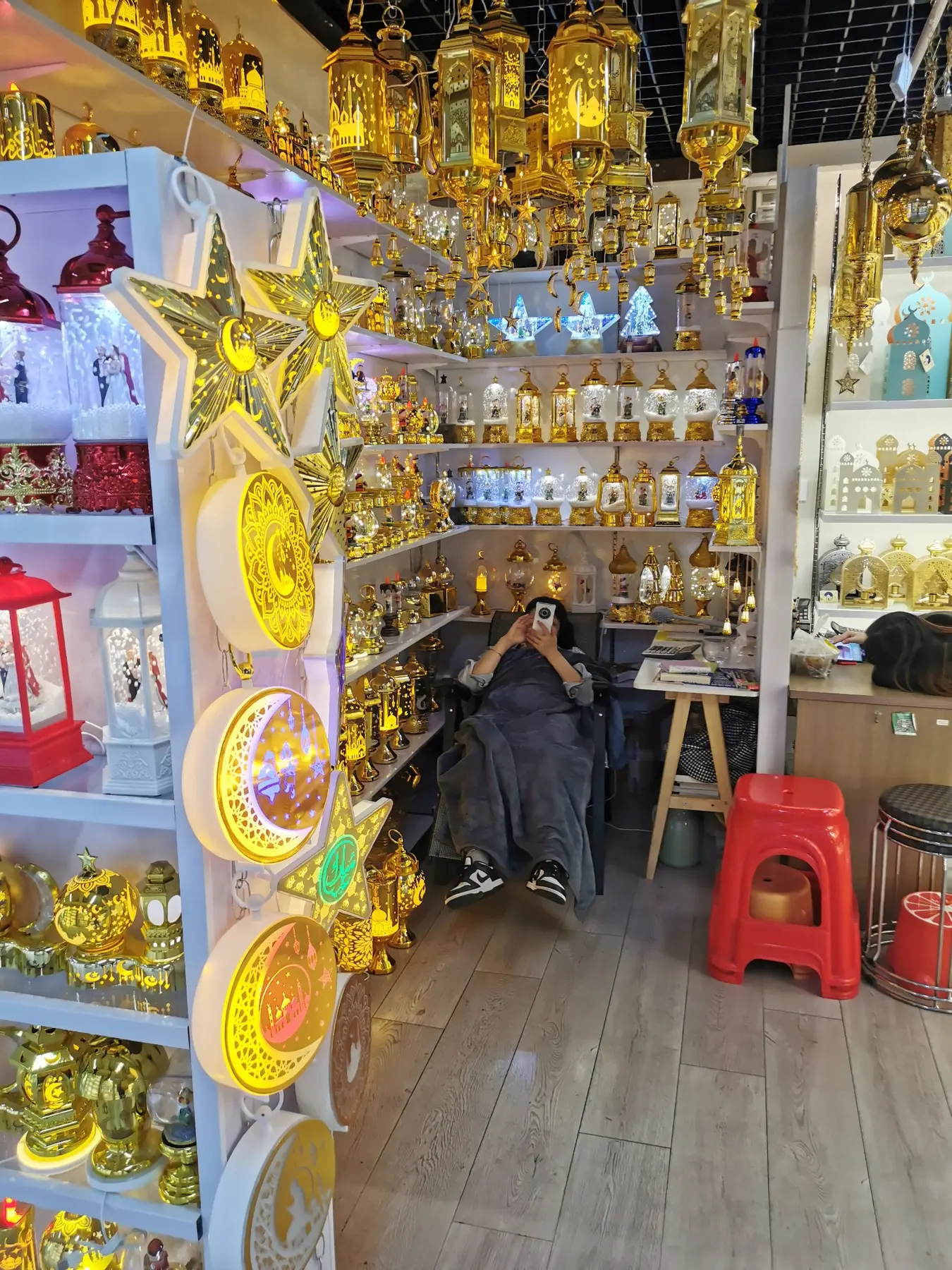
Gold-coloured lanterns, stars, crescents and mosque motifs fill the ceiling and shelves around a reclining worker, converting religious and festive light into an immersive wholesale atmosphere.
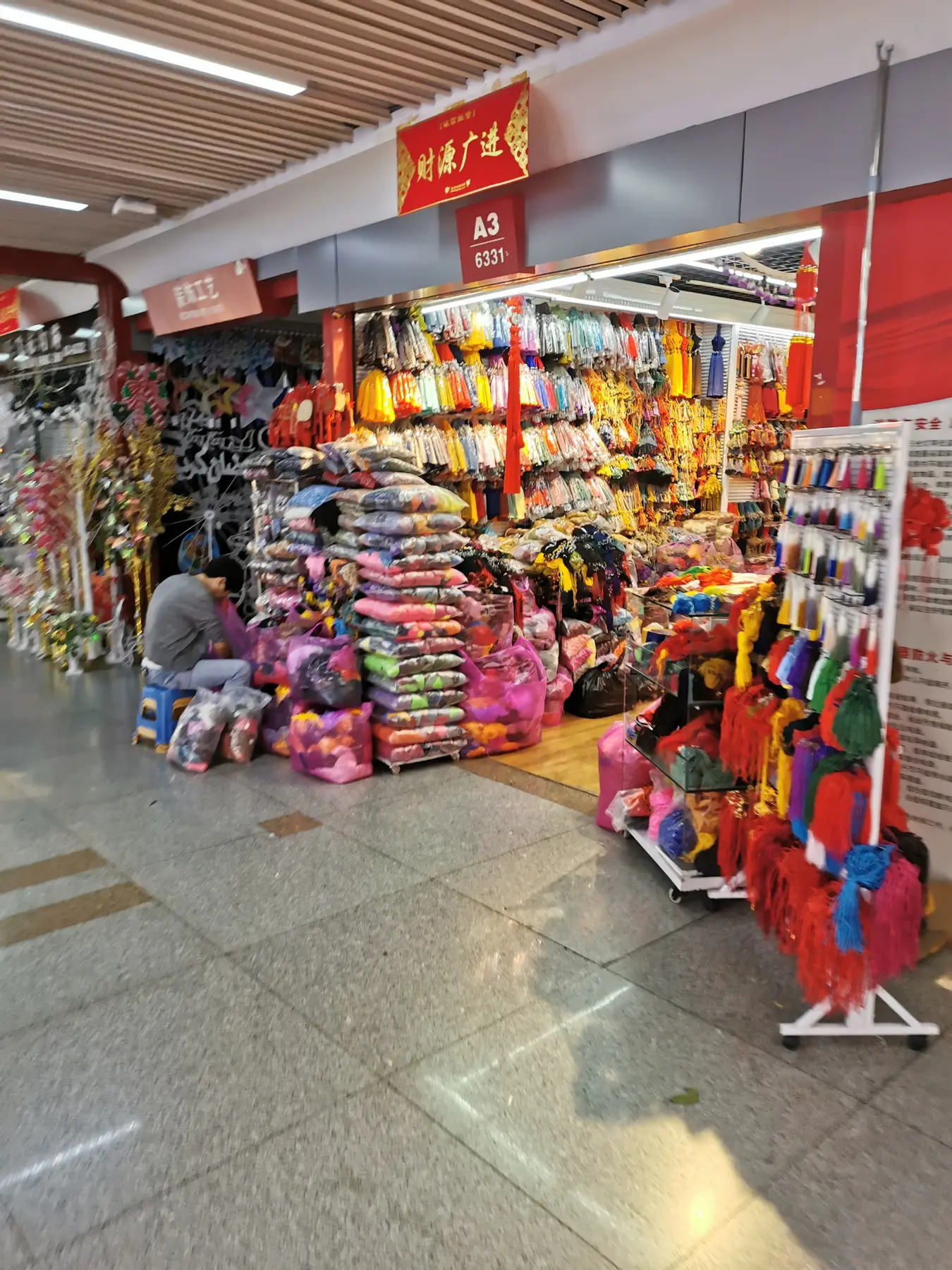
Tassels, fringes, cords and bagged soft goods fill the booth and spill onto racks and stacks in the corridor, collapsing the boundary between sample display, bulk storage and passage.
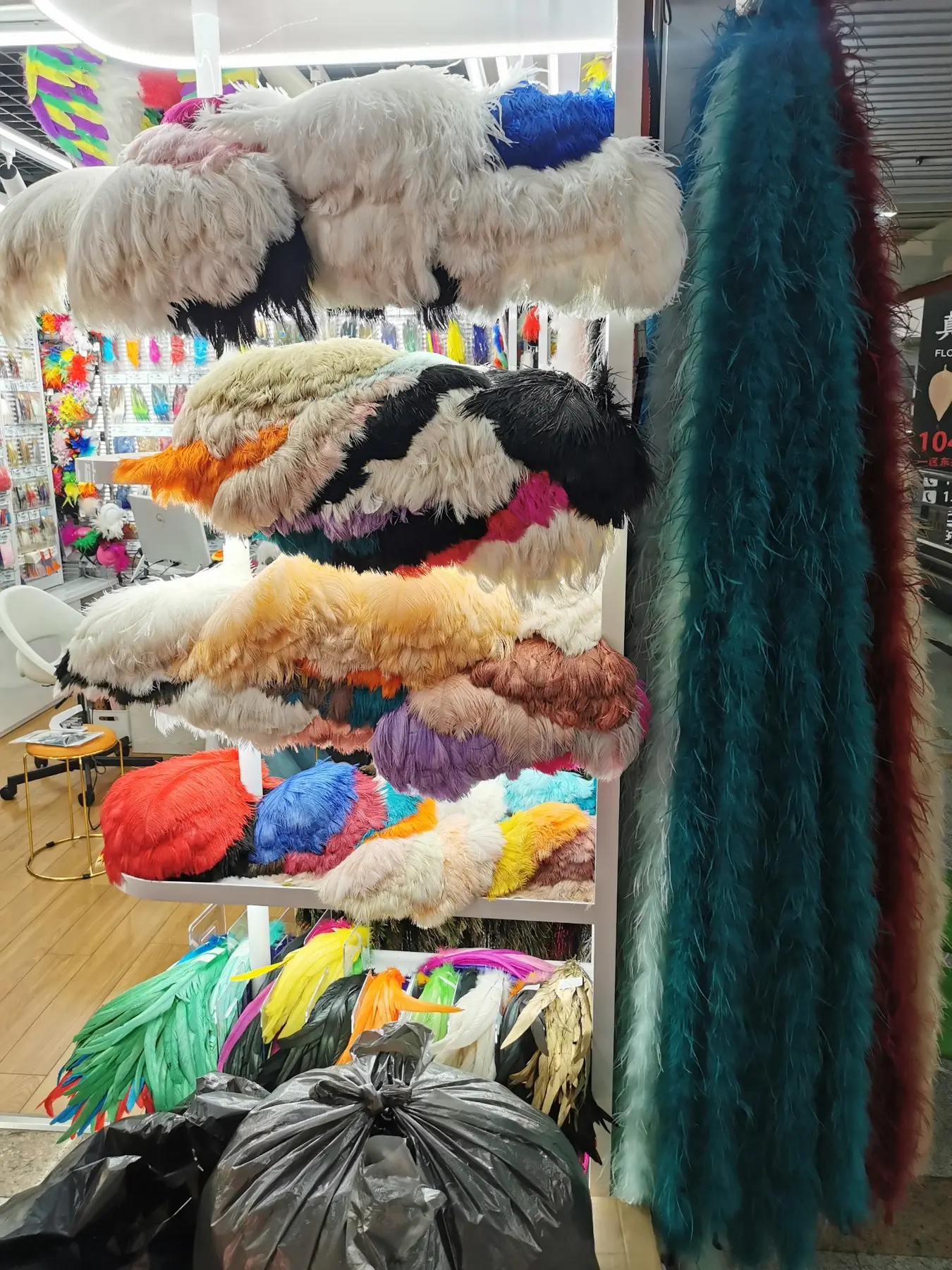
Feathered trims and dense shaggy panels are folded, layered and suspended in colour groups, making texture itself into a repeated wholesale unit.
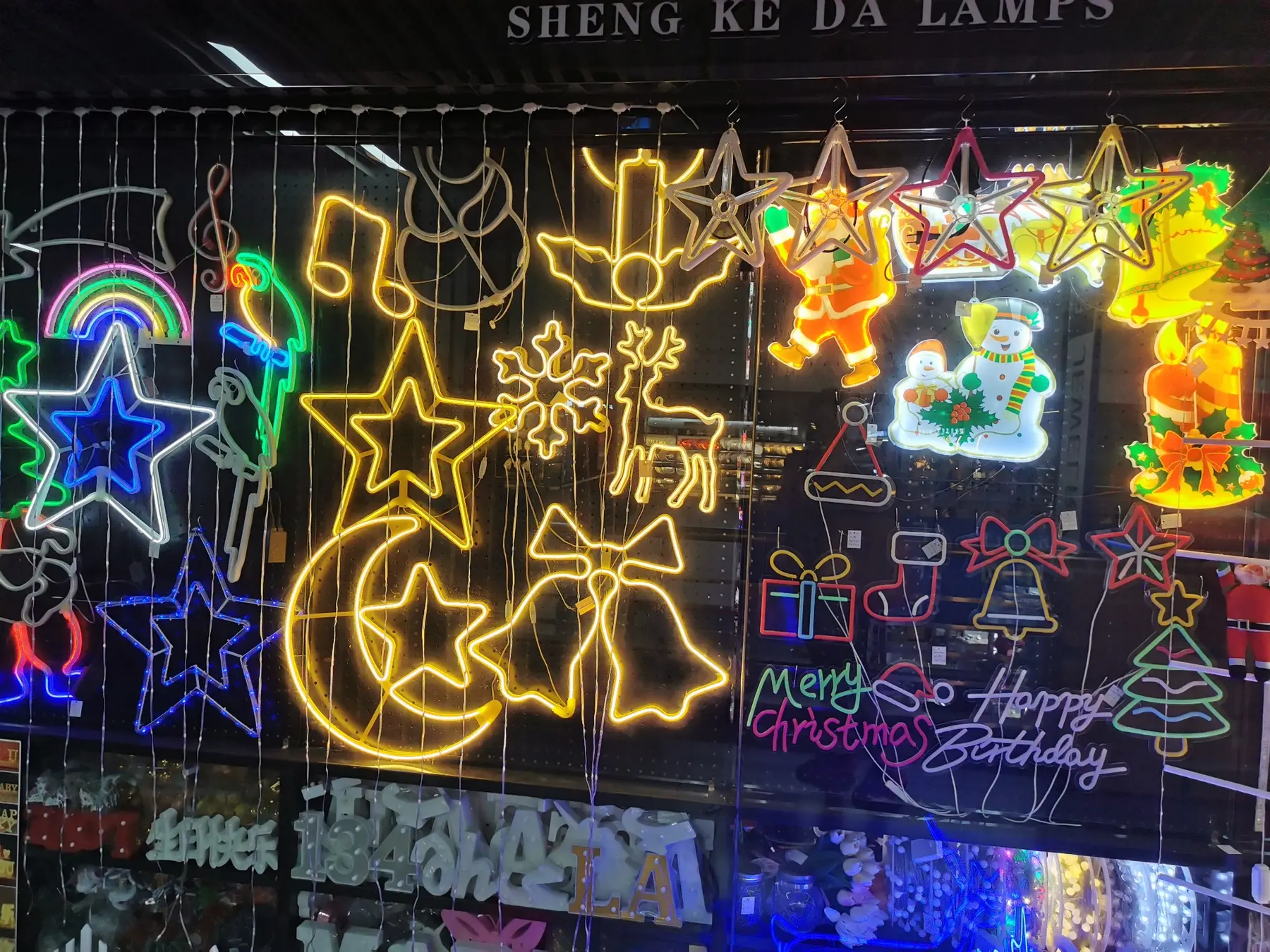
Stars, bells, reindeer, snowmen and birthday messages overlap as illuminated outlines, allowing several future celebrations to occupy the same dark display wall.
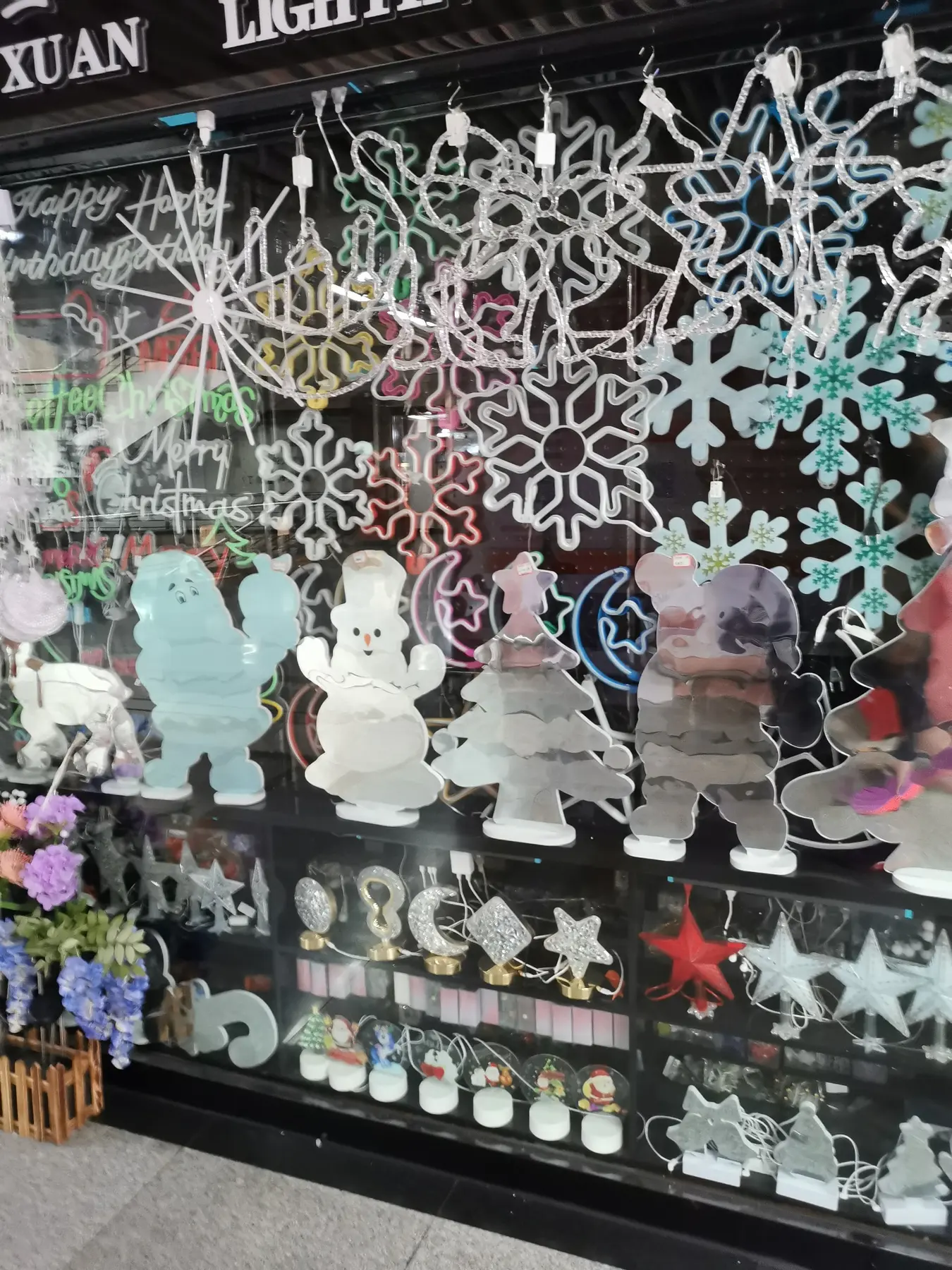
Unlit snowflakes, snowmen and Santa silhouettes crowd a reflective shopfront, revealing the cables and translucent materials behind their promised seasonal glow.
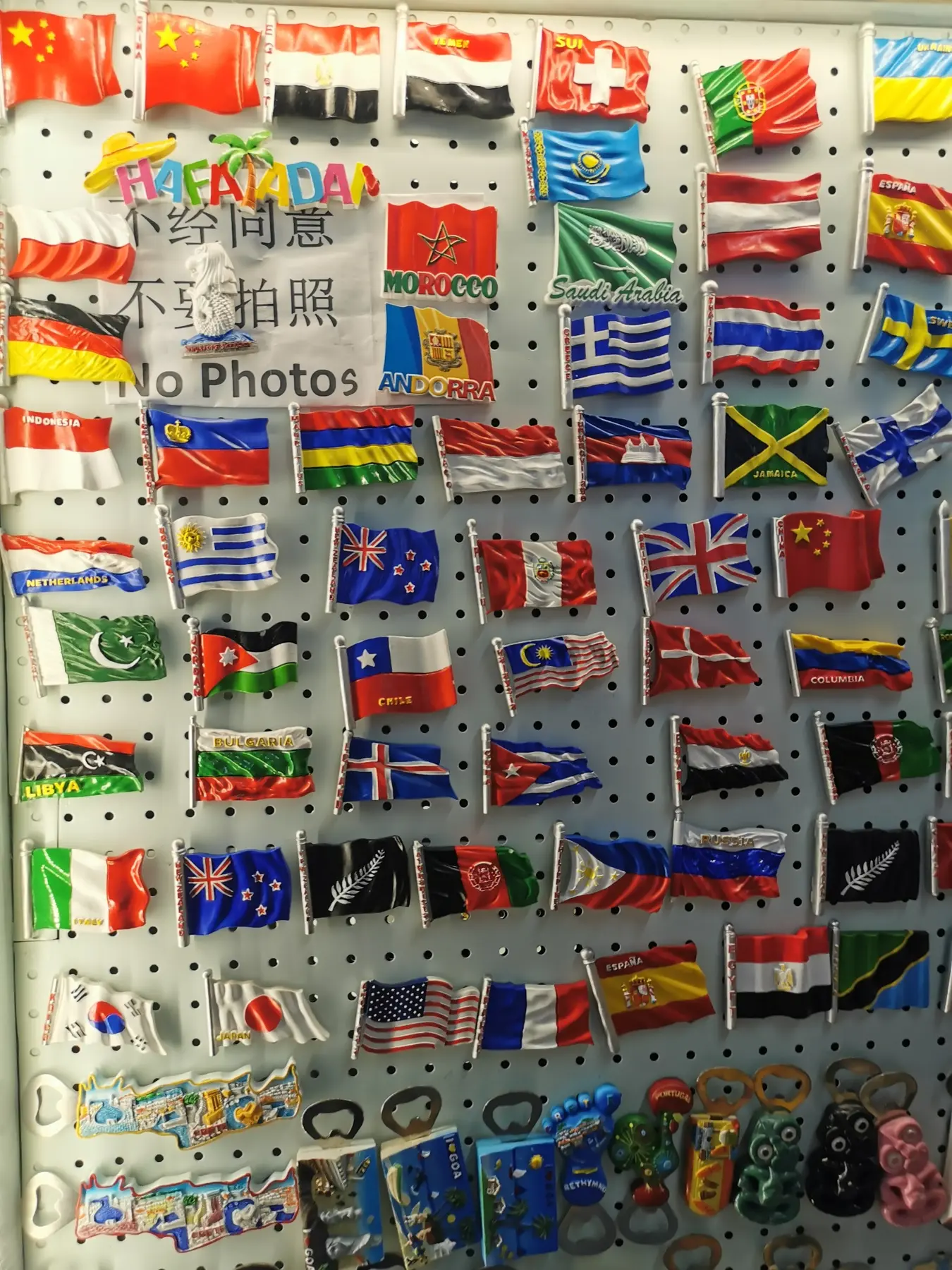
Dozens of national flags are reduced to glossy relief magnets and organised as a comparative wall display, while a handwritten notice declares that photographs are forbidden.
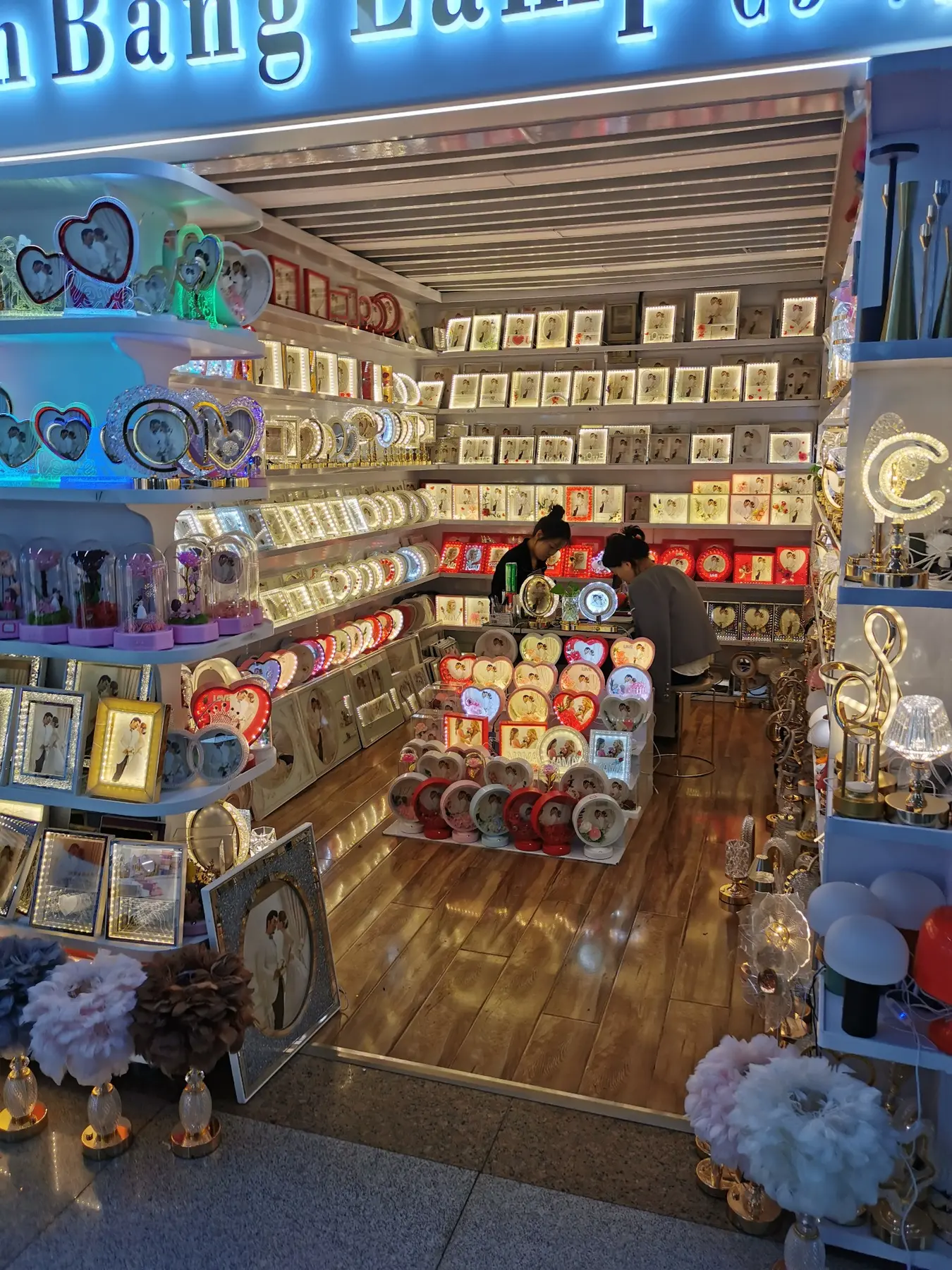
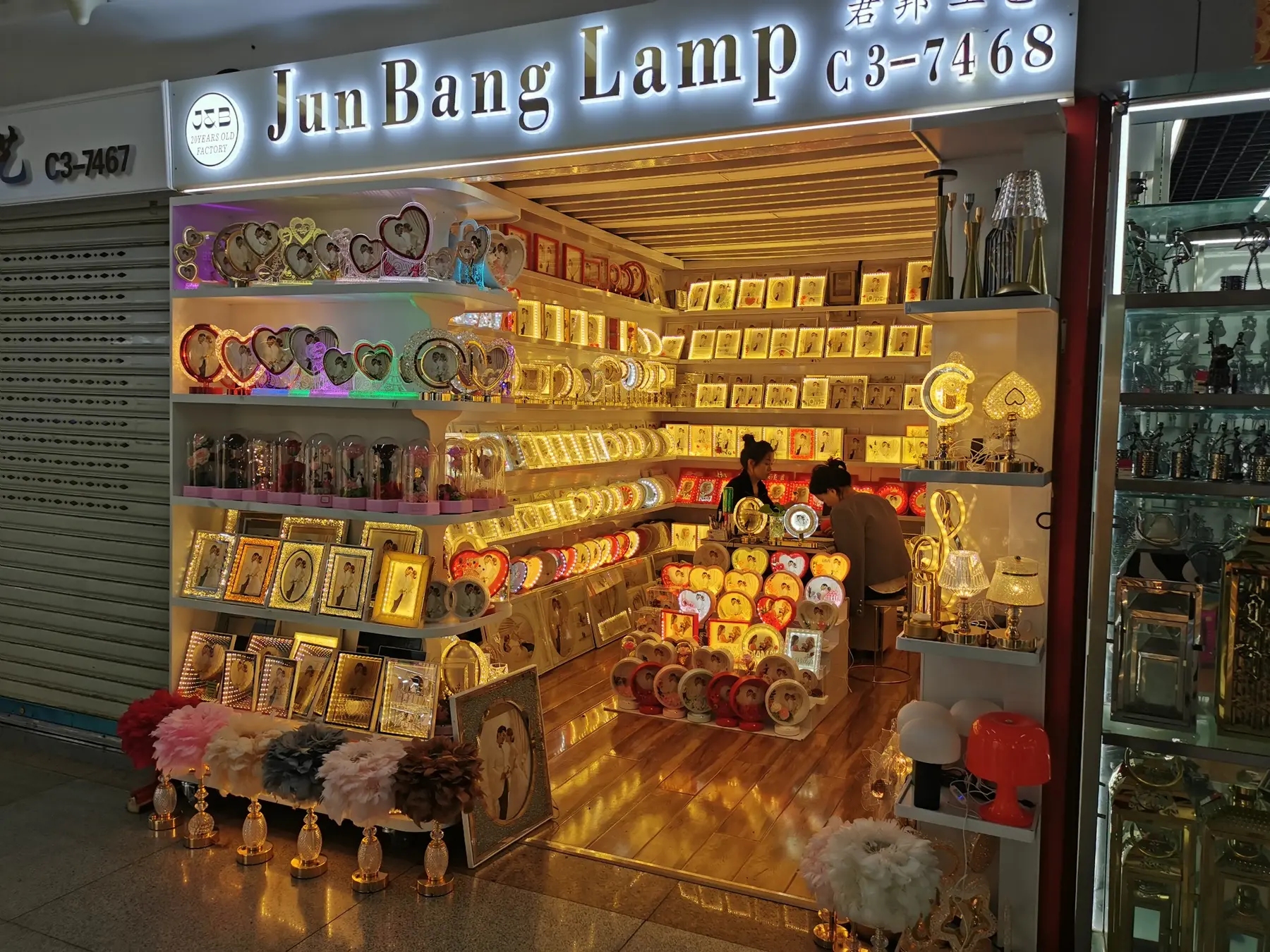
Wedding photographs repeat across heart-shaped lamps, glowing frames and small illuminated objects, turning the sample couple into an interchangeable image for every format.
The Jun Bang Lamp booth presents illuminated wedding frames in tightly ordered rows while lamps, feathered shades and floor-standing samples extend its warm display beyond the shop threshold.

03 / CONTRIBUTION PROTOCOL

From image to record

Yiwucore is editorial rather than automatic. A submission proposes an encounter; the index tests how it belongs.

  1. 01CONTRIBUTE

    A contributor uploads one image and its situated metadata.

  2. 02REVIEW

    The submission enters the index as a non-public candidate record.

  3. 03CLASSIFY

    Its primary class and secondary descriptors are checked editorially.

  4. 04PUBLISH

    Accepted records receive an accession number and become searchable.

  5. 05REVISE

    Categories remain provisional and can change as the index develops.

04 / ABOUT

Yiwucore is less a fixed look than an aesthetic condition produced by infrastructure.

The project begins with Yiwu International Trade City: a vast wholesale environment in which small commodities are organised through extreme repetition, narrow specialisation and global distribution. Here, infrastructure does not sit behind the image. It becomes the image.

Borrowing the naming logic of online “core” aesthetics, Yiwucore asks what happens when the functional spaces of commodity circulation are encountered, framed and redistributed as an aesthetic. The index extends beyond Yiwu to follow its global recurrences without treating every crowded shop or cheap object as the same thing.

This is a research project by artist Laura Yuile. Its categories are provisional, its boundaries disputable and its development open to contributors. The index records not only accepted images, but the changing terms through which they are understood.

CONTRIBUTION FORM / REV. 0.1

Propose a record

Submit one image per form. Required metadata helps the record remain situated rather than becoming a free-floating aesthetic image.

01 / IMAGE
02 / SITUATION
03 / PROPOSED CLASSIFICATION
VISUAL TRAITS / SELECT ANY
04 / CONTRIBUTOR